New Delhi | August 4, 2026
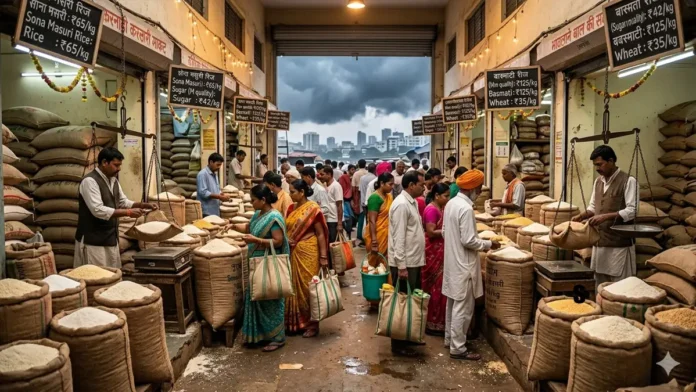
India Food Inflation 2026 is showing fresh signs of pressure as the country’s festive season approaches. Prices of essential food staples, particularly sugar and rice, have increased significantly over the past month due to a combination of weak monsoon conditions, El Niño-related weather risks, supply constraints, and speculative stockpiling.
According to data released by the Department of Consumer Affairs, wholesale sugar prices have climbed by more than 5% over the past month, while retail rice prices continue to edge higher across several states, increasing household grocery bills.
Sugar Prices Cross ₹4,590 Per Quintal
Official data shows that the average wholesale price of sugar has increased by more than 5% in the last month, reaching approximately ₹4,593 per quintal.
Retail prices have also moved higher:
- One month ago: ₹47.11 per kg
- August 3, 2026: ₹49.53 per kg
On an annual basis, sugar prices have risen by approximately 7.64%, reflecting tightening supplies and increased production costs.
Rice Prices Continue to Climb
Rice prices have also recorded steady gains across India.
The all-India average retail price increased:
- One month ago: ₹44.13 per kg
- August 3, 2026: ₹45.13 per kg
Southern states have witnessed even sharper increases.
According to market data, rice prices in:
- Andhra Pradesh
- Telangana
- Karnataka
- Kerala
have increased by 10% to 15% in some markets, putting additional pressure on household food budgets.
Why Are Food Prices Rising?
Analysts point to several factors driving the latest increase in food inflation.
1. Weak Monsoon and El Niño
Below-normal rainfall in several agricultural regions has raised concerns about crop production, particularly for rice.
El Niño-related weather patterns continue to threaten agricultural output across parts of Asia, creating uncertainty in grain markets.
2. Supply Constraints
Sugar-producing states such as Maharashtra and Karnataka have reported lower availability of older sugar stocks.
At the same time, increased diversion of sugarcane for ethanol production has reduced sugar supplies available for the domestic market.
3. Stockpiling and Speculation
Market experts say traders and speculators have taken advantage of regional supply imbalances by accumulating inventories, reducing open market availability and contributing to higher prices.
Authorities continue to monitor markets for possible hoarding activities.
4. Rising Global Costs
Higher international prices for:
- Fertilizers
- Energy
- Agricultural inputs
- Freight
have also increased production costs, placing upward pressure on retail food prices.
Rice Could Become Even More Expensive
A policy paper released by Professor Jayashankar Telangana Agricultural University warns that global rice prices could rise by 30% to 50% if El Niño significantly reduces production and countries begin precautionary stockpiling.
Researchers note that continued weather disruptions across major rice-producing regions in Asia could tighten global supplies and push prices even higher in the coming months.
Festival Season May Add Further Pressure
With India’s festive season approaching, demand for sugar traditionally rises because of increased production of:
- Sweets
- Bakery products
- Processed foods
- Festival confectionery
If supply remains constrained, industry experts expect additional upward pressure on prices during the coming weeks.
Impact on Household Budgets
Higher prices for everyday staples are already affecting consumers across the country.
Families are likely to experience:
- Higher monthly grocery bills
- Increased household expenses
- Rising costs for festive shopping
- Higher prices for sweets and packaged foods
Economists say food inflation will remain closely linked to monsoon performance and government measures to improve supply availability.
Key Highlights
- Sugar wholesale prices have risen more than 5% in one month.
- Retail sugar prices increased from ₹47.11 to ₹49.53 per kg.
- Rice prices reached an average of ₹45.13 per kg nationally.
- Southern states reported rice price increases of 10–15%.
- Weak monsoon, El Niño, ethanol diversion, and stockpiling are driving prices higher.
- Experts warn global rice prices could rise 30–50% if production declines further.
Reference Links
- Department of Consumer Affairs (Price Monitoring): https://consumeraffairs.nic.in
- Ministry of Consumer Affairs, Food & Public Distribution: https://dfpd.gov.in
- India Meteorological Department (IMD): https://mausam.imd.gov.in
- Ministry of Agriculture & Farmers Welfare: https://agricoop.gov.in