Jind, Haryana | July 17, 2026
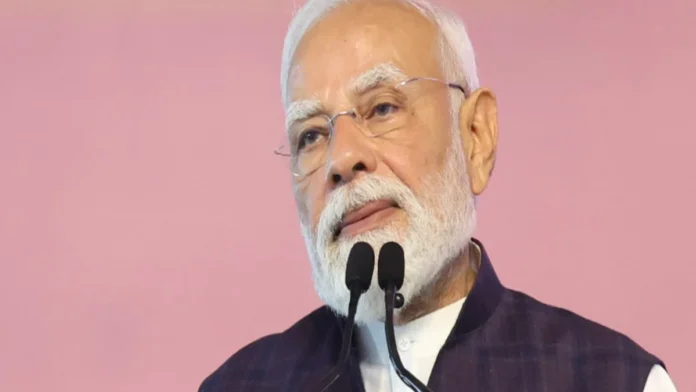
Prime Minister Narendra Modi on Friday inaugurated India’s first hydrogen-powered train, flagging off the service between Jind and Sonipat in Haryana. The launch marks the beginning of hydrogen-powered rail operations on the Indian Railways network and represents a significant step toward cleaner and more sustainable transportation.
Addressing a public gathering in Jind, the Prime Minister also announced development projects worth more than ₹14,000 crore, covering railway infrastructure, highways, heritage initiatives, and new medical colleges for the state.
India Enters the Hydrogen Rail Era
The newly launched hydrogen-powered train has been developed at an estimated cost of ₹82 crore and is equipped with a 1,200-kilowatt hydrogen propulsion system. According to the government, the train can accommodate approximately 2,600 passengers while offering modern onboard amenities and an environmentally friendly travel experience.
Prime Minister Modi described the project as a milestone for India’s technological capabilities, noting that only a handful of countries currently operate hydrogen-powered trains.
‘Jind Will Be Remembered in Railway History’
During his speech, Modi said Jind would hold a special place in India’s railway history, comparing the hydrogen train launch with the country’s first passenger railway service.
“Just as India’s first train ran between Bombay and Thane, whenever hydrogen-powered trains are discussed in the future, Jind, Sonipat, and Haryana will always be remembered,” the Prime Minister said.
He added that the hydrogen train demonstrates India’s growing expertise in advanced railway technologies and clean energy transportation.
Train Designed and Built in India
The Prime Minister emphasized that the hydrogen-powered train was designed by Indian engineers and manufactured by an Indian company, calling it a major achievement under the country’s drive for technological self-reliance.
According to Modi, the train develops around 3,200 horsepower, making it one of the most powerful hydrogen-powered trains in operation. He also said the Jind–Sonipat route represents one of the world’s longer operational hydrogen train services.
The Prime Minister noted that continued research and innovation would help reduce costs and improve efficiency, creating opportunities for expanding hydrogen rail services across India.
Development Expected to Boost Jind
Highlighting the broader economic impact of the project, Modi said improved infrastructure would attract industries and investment to Jind.
He expressed confidence that better connectivity and modern transport infrastructure would encourage companies to establish operations in the region, generating employment and supporting local economic growth.
Remarks on Cleanliness
During his address, the Prime Minister also appealed to residents to maintain cleanliness and make sanitation a part of everyday life.
He urged citizens to ensure that cleanliness becomes a habit rather than something associated only with government campaigns, saying sustained public participation is essential for keeping cities and towns clean.
‘Haryana Is Moving on a New Track of Development’
Modi said Haryana has made significant progress in recent years and described the state’s development as moving onto “a new track.”
According to the Prime Minister, the launch of the hydrogen train reflects the development agenda of the central and state governments and adds fresh momentum to infrastructure expansion in Haryana.
₹14,000 Crore Worth of Development Projects
Besides inaugurating the hydrogen train, the Prime Minister announced projects valued at more than ₹14,000 crore.
The package includes:
- New railway infrastructure projects.
- National highway developments.
- Heritage conservation initiatives.
- Two new medical colleges for Haryana.
He said these projects would strengthen transportation, healthcare, and regional development across the state.
Rail Electrification Milestone
The Prime Minister also highlighted the progress made in railway electrification across India.
According to Modi, railway electrification began in 1925, but by 2014, only around 30% of the national rail network had been electrified.
He stated that over the past twelve years, electrification has expanded to approximately 99% of India’s railway network, while Haryana has achieved 100% railway electrification.
Modi said the extensive electrification has strengthened the resilience of India’s railway system by reducing dependence on diesel fuel.
Hydrogen Technology Supports Green Transportation
Hydrogen-powered trains produce significantly lower direct emissions than conventional diesel-powered trains and are viewed as an important component of India’s long-term clean energy strategy.
The launch is expected to contribute to the government’s efforts to modernize Indian Railways while promoting environmentally sustainable transportation technologies.