NEW DELHI | August 1, 2026
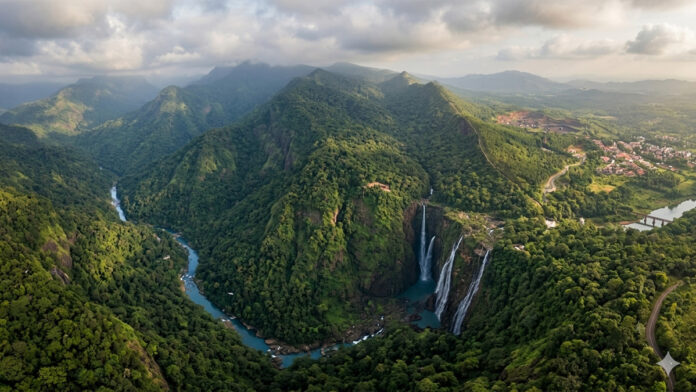
Western Ghats Eco-Sensitive Zone Draft has been released by the Union government, proposing to designate 56,825.7 square kilometers of the Western Ghats as an Ecologically Sensitive Area (ESA). If finalized, the proposal would prohibit or strictly regulate new mining operations, large townships, red-category industries, and new thermal power plants across nearly 3,000 villages spread across six states.
The Ministry of Environment, Forest and Climate Change (MoEFCC) has invited public objections and suggestions within 60 days before issuing the final notification. The government has clarified that the proposal will not affect existing homes, agricultural activities, plantations, or individual property rights.
What Does the Draft Notification Propose?
Under the latest draft, environmentally harmful activities would face strict restrictions within the proposed Ecologically Sensitive Area.
The proposal seeks to prohibit:
- New mining and quarrying projects
- New thermal power plants
- New red-category (highly polluting) industries
- Large-scale township and major construction projects
The objective is to conserve one of India’s most ecologically fragile mountain ecosystems while allowing sustainable livelihoods and existing agricultural practices to continue.
Which States Will Be Affected?
The proposed Eco-Sensitive Area covers parts of six states:
- Karnataka
- Maharashtra
- Kerala
- Tamil Nadu
- Goa
- Gujarat
Among them, Karnataka would have the highest number of affected villages, with approximately 1,449 villages falling within the proposed protected area. Maharashtra follows with around 1,133 villages, while the remaining villages are spread across Kerala, Tamil Nadu, Goa, and Gujarat.
Government Says Farming and Property Rights Will Not Be Affected
The Centre emphasized that the draft notification is aimed at regulating environmentally hazardous industrial activities rather than restricting people’s daily lives.
According to the proposal:
- Existing residential houses will remain unaffected.
- Agriculture, plantations, and horticulture can continue.
- Farmers’ land ownership and property rights will remain protected.
- Routine livelihood activities will not be restricted.
The ministry has invited stakeholders, state governments, and citizens to submit comments before the notification is finalized.
Why Is the Western Ghats So Important?
Stretching for nearly 1,600 kilometers along India’s western coast, the Western Ghats are internationally recognized as one of the world’s most significant ecological landscapes.
The region is:
- A UNESCO World Heritage Site
- One of the world’s eight major biodiversity hotspots
- Home to more than 7,400 plant species
- Habitat for thousands of animal species, many found nowhere else on Earth
Several of India’s major rivers—including the Godavari, Krishna, Cauvery, Tungabhadra, Bhima, Periyar, Netravati, and Zuari—originate in the Western Ghats, making the mountain range vital for water security across southern and western India.
Why Is the Centre Pushing for Greater Protection?
Environmental experts have repeatedly warned that parts of the Western Ghats have experienced increasing pressure from:
- Illegal mining
- Quarrying
- Hill cutting
- Unplanned urban development
- Resort construction
- Infrastructure expansion
The proposed Eco-Sensitive Area aims to balance environmental conservation with sustainable development while protecting fragile ecosystems from irreversible damage.
Public Consultation Underway
The draft notification is not yet final.
The Ministry has provided a 60-day consultation period during which state governments, local communities, environmental experts, businesses, and citizens can submit objections or suggestions before the final Ecologically Sensitive Area notification is issued.
Reference Links
Official Government Documents
- Ministry of Environment, Forest and Climate Change (MoEFCC)
https://moef.gov.in/ - Draft Notification on Western Ghats Ecologically Sensitive Area (Gazette Notification)
https://moef.gov.in/storage/tender/1723024218.pdf