By Team INVC | INVC NEWS
NEW DELHI, India | October 6, 2026 —
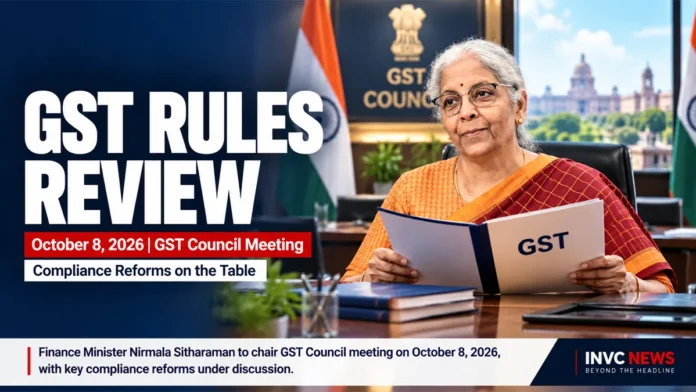
The GST Council meeting scheduled for October 8 could bring significant discussions on how businesses register, file returns, claim refunds, and face enforcement action. Among the reported proposals is a review of GST officers’ arrest powers, alongside a single application process for registration across multiple states. For business owners, the immediate issue is understanding what these proposals could change—and recognizing that existing obligations continue until authorities formally implement any approved reforms.
INVC NEWS | BEYOND THE HEADLINE
THE 60-SECOND BRIEF
- The 57th GST Council meeting will now take place on Thursday, October 8, instead of October 7, according to reports citing the Council Secretariat.
- The latest postponement marks the second change in the meeting’s schedule.
- Finance Minister Nirmala Sitharaman will chair the meeting.
- Expected discussions include registration, returns, refunds, and enforcement reforms.
- Reported proposals include curbing or removing GST officers’ direct arrest powers.
- A single application for registration in multiple states could also come under consideration.
- Discussion or recommendation alone does not bring a new rule into force.
What Happened: The Council Rescheduled Its Meeting
The GST Council Secretariat moved the meeting by one day, citing unavoidable circumstances, according to published reports.
The Council brings together the Union finance minister and state representatives to consider recommendations on the GST framework. Its decisions can shape both tax policy and the procedures businesses follow.
This meeting’s reported agenda focuses on compliance and enforcement. Consequently, business owners should watch more than potential tax-rate announcements. Changes to forms, documentation, refunds, and legal procedures can also affect daily operations.
Arrest Powers: What the Reported Proposal Could Change
Reports indicate that the Council may consider removing GST officers’ direct power to arrest taxpayers or introducing a requirement for judicial authorization.
However, the final design remains uncertain. The Council has yet to announce an adopted recommendation from this meeting.
Businesses should therefore avoid treating the proposal as an existing protection against arrest. A change to statutory powers would require the appropriate legal process before it could take effect.
The distinction matters because a policy discussion, a Council recommendation, and an enforceable legal amendment represent separate stages.
Would a Change End Action Against Tax Fraud?
The reported reform does not suggest that authorities would stop pursuing serious fraud or deliberate tax evasion.
Instead, it concerns the powers and procedures authorities use when taking enforcement action. Reports indicate that serious wrongdoing could still face criminal proceedings through the applicable legal framework.
Likewise, a proposal concerning arrest does not automatically remove powers relating to searches, seizures, or summonses. The final wording of any amendment would determine which provisions change and which remain.
For taxpayers, the practical implication is clear: discussion of enforcement reform does not cancel filing duties, payment obligations, or the need to respond appropriately to lawful proceedings.
Single Application for Multiple States: Why Businesses Are Watching
Another reported proposal would allow businesses to apply for GST registration in several states through one application process.
That could reduce repetitive paperwork for companies expanding their operations. However, a common application does not necessarily mean one nationwide GST registration number or the removal of state-specific compliance requirements.
Those details would depend on the approved framework.
Businesses will need clarity on eligibility, supporting documents, verification, and how the process handles applications involving several jurisdictions.
Until authorities publish those details, the proposal remains an opportunity for simplification rather than a completed operating system.
Returns and Refunds: The Everyday Business Impact
The Council is also expected to discuss changes to return filing and refund mechanisms.
Simpler procedures could reduce the time businesses spend resolving filing issues. Meanwhile, a more efficient refund process could help eligible businesses manage cash flow.
However, the reported agenda does not establish a new refund deadline or guarantee faster payment in every case. Eligibility checks and the final procedures will matter.
For smaller businesses in particular, useful reform would need to translate into clear forms, predictable requirements, and practical instructions.
What Changes Now—and What Still Needs Approval?
| Issue | Position Before the Meeting |
| Meeting date | Reports place it on October 8 |
| Officers’ arrest powers | Proposed review; no implemented change established |
| Registration across several states | Single application proposal under consideration |
| Return filing | Possible procedural reforms |
| Refund process | Possible improvements; no new timeline established |
What Happens Next
The first important development will be the Council’s official recommendations after the meeting.
Next, businesses should check whether a recommendation requires legislation, amended rules, a notification, or a portal update. They should also look for commencement dates and transition instructions.
These details will establish when a change becomes usable and which taxpayers it covers.
Meanwhile, businesses should continue following applicable requirements rather than postponing compliance in anticipation of reform.
INVC NEWS Bottom Line
The October 8 meeting could advance discussions on simpler GST compliance and stronger safeguards around enforcement.
For business owners, the key is to separate proposals from implemented changes. The Council’s recommendations, subsequent legal steps, and effective dates will determine what actually changes.