
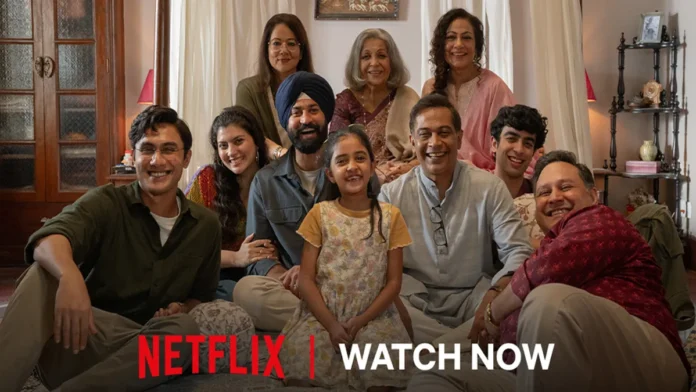
NEW DELHI, INDIA | October 30, 2026: Diwali is a time when families come together, homes light up with festive decorations, and long-forgotten conversations find their way back to the dinner table. But family reunions are not always about celebrations. They can also bring unresolved disagreements, uncomfortable questions, emotional revelations and differences between generations into the open.
Netflix’s Meethe Mein Kya Hai explores exactly this side of family life. Headlined by Ritwik Bhowmik, Rohini Hattangadi and Ayesha Raza Mishra, the film brings a large family together in Lucknow during Diwali. What begins as a festive gathering gradually turns into an emotional journey through grief, marriage, acceptance, parental expectations and the complicated relationships that hold families together.
The film has warmth, relatable moments and a dependable ensemble cast. However, while its performances make the experience enjoyable, the familiar storyline prevents it from becoming a truly memorable family entertainer.
What Is Meethe Mein Kya Hai About?
The story revolves around the Rastogi family, which gathers at the ancestral home of its matriarch, Nani, in Lucknow to celebrate Diwali. The house is filled with festive preparations, family conversations and the familiar chaos that comes with bringing several generations under one roof.
At the centre of the story is Jai, played by Ritwik Bhowmik. Still struggling with the loss of his wife, Jai has become emotionally distant from his family. He is considering leaving his old life behind and starting afresh somewhere else. Returning home for Diwali, however, forces him to confront relationships and emotions he has been trying to avoid.
The family gathering takes an unexpected turn when Jai’s sister, Sana, reveals that she has secretly married Karam, a divorced man who has a daughter from his previous relationship. Her decision surprises several family members and sparks disagreements about marriage, social expectations, family approval and personal freedom.
Meanwhile, Jai’s mother, Amrita, is anxious about her son’s future. She wants him to move forward after his loss, but her concern often turns into interference in his personal decisions.
As the celebrations continue, old tensions surface and different family members are forced to reconsider their assumptions. The film gradually asks a familiar but meaningful question: Can a family remain united when its members do not always agree with one another?
Performances: Ritwik Bhowmik Is the Emotional Anchor
Ritwik Bhowmik delivers a restrained and sincere performance as Jai. His character is dealing with grief, loneliness and uncertainty about the future. Rather than relying on exaggerated emotional scenes, Bhowmik uses subtle expressions and controlled performances to communicate his character’s inner conflict.
His portrayal gives the film much of its emotional weight, although the screenplay could have explored Jai’s personal journey in greater depth.
Rohini Hattangadi is one of the film’s strongest performers. As Nani, she brings warmth, authority and an unmistakable presence to the family. Her character represents a generation that believes family unity is paramount, even when individual choices create disagreements.
Ayesha Raza Mishra is equally convincing as Amrita, a mother whose affection for her children is mixed with anxiety and a desire to influence their decisions. She captures the familiar tension between parental concern and the younger generation’s need for independence.
Dalai brings confidence to Sana’s character, while Vikram Bakshi adds an approachable quality to Karam. The supporting cast helps create the atmosphere of a large Indian family where everyone has an opinion and even a casual conversation can turn into a debate.
Direction and Screenplay: Relatable, But Not Particularly Original
Director Radhika Bansal takes an understated approach to her storytelling. Instead of building the film around dramatic twists or loud confrontations, she focuses on everyday family interactions.
The Lucknow setting, festive decorations, household conversations and Diwali celebrations create an inviting atmosphere. Several situations feel instantly recognisable, particularly the uncomfortable questions relatives ask, the advice nobody requests and the disagreements that emerge when family members make unconventional choices.
However, the screenplay also reveals the film’s biggest limitation. Generational conflicts, parental expectations, complicated marriages and the struggle for personal independence are familiar themes in Indian cinema. Although the film handles these subjects with sensitivity, it does not always offer a fresh perspective.
Sana’s decision to marry Karam could have provided an opportunity to explore blended families and social acceptance more deeply. Similarly, Jai’s grief offers considerable emotional potential, but his journey sometimes gets overshadowed by the larger family drama.
Some sequences also feel longer than necessary, affecting the film’s pace.
Music, Cinematography and the Lucknow Setting
The Lucknow backdrop adds considerable charm to the film. The ancestral home, festive preparations and family gatherings give the story a distinctly Indian atmosphere.
Diwali is not merely a decorative element here. It becomes the reason the family comes together and the occasion that brings unresolved emotions to the surface.
Amit Trivedi’s music complements the film’s celebratory and emotional tone. The cinematography also supports its warm visual atmosphere without making the presentation unnecessarily elaborate.
What Works and What Doesn’t?
What works:
- Ritwik Bhowmik’s sincere and emotionally restrained performance.
- Rohini Hattangadi’s memorable presence as Nani.
- Ayesha Raza Mishra’s convincing portrayal of a concerned mother.
- Relatable family conversations and understated humour.
- The festive Lucknow setting and warm Diwali atmosphere.
What doesn’t work as well:
- The central storyline feels familiar.
- Some emotional conflicts deserve greater depth.
- The screenplay loses momentum in certain portions.
- The narrative lacks the surprises needed to make it truly distinctive.
Should You Watch Meethe Mein Kya Hai?
If you enjoy family dramas that focus on relationships, emotional conflicts and everyday situations, Meethe Mein Kya Hai is a reasonable choice for a relaxed evening. Its performances and festive atmosphere make it an accessible watch, particularly for viewers who prefer stories about families rather than action or high-intensity drama.
However, audiences looking for an original storyline, powerful emotional confrontations or unexpected twists may find the film predictable.
It is a pleasant family drama, but not a film that completely lives up to its potential.
INVC NEWS Verdict
Meethe Mein Kya Hai succeeds in capturing the warmth, disagreements and emotional complexity of an Indian family during Diwali. Ritwik Bhowmik leads the film with sincerity, while Rohini Hattangadi and Ayesha Raza Mishra provide strong support.
Its biggest strength is its cast and its biggest weakness is its familiar storytelling. The film has enough warmth to entertain, but it needed a tighter screenplay and a more distinctive narrative to leave a lasting impression.
Our Verdict: A pleasant, performance-driven family drama that offers warmth and relatable moments, even if its story lacks a fresh flavour.
Meethe Mein Kya Hai: Movie Details
- Film: Meethe Mein Kya Hai
- Release Date: October 30, 2026
- Streaming Platform: Netflix
- Language: Hindi
- Genre: Family Drama
- Director: Radhika Bansal
- Cast: Ritwik Bhowmik, Rohini Hattangadi, Ayesha Raza Mishra, Dalai and Vikram Bakshi
INVC NEWS Star Rating
⭐⭐⭐☆☆ 3/5
| Category | Rating |
|---|---|
| Story and Screenplay | 2.5/5 |
| Performances | 3.5/5 |
| Direction | 3/5 |
| Music and Cinematography | 3/5 |
| Overall Entertainment | 3/5 |
Final Rating: 3 out of 5 stars.
A warm family entertainer with good performances, but a familiar storyline keeps it from becoming a standout Diwali release.