Washington/Kyiv | October 19, 2026 | INVC NEWS
Did Ukraine go three days without crucial American warnings about incoming Russian ballistic missiles? Ukrainian President Volodymyr Zelensky says it did—and his disclosure has intensified questions about Washington’s military support for Kyiv as tensions between the two governments continue to grow.
In an interview with NBC’s Meet the Press aired on Sunday, October 18, Zelensky said the United States had temporarily stopped sharing a critical category of intelligence that helps Ukraine anticipate Russian ballistic missile attacks. He said the information-sharing arrangement had since been restored.
But the controversy does not end there. Zelensky also said restrictions affecting the Starlink satellite communications system used by Ukrainian forces had not been fully lifted. US officials, however, disputed his suggestion that the American government was responsible for the Starlink restrictions.
The competing accounts have raised fresh questions about the reliability of Ukraine’s access to vital intelligence and battlefield communications as its war with Russia continues.
Zelensky Says Ukraine Missed Three Days of Critical Missile Warnings
Zelensky said the interruption affected intelligence that Ukraine relies on to receive advance warnings of Russian ballistic missile launches.
According to the Ukrainian president, European governments and other international partners continued to provide intelligence during the period. However, he argued that their capabilities could not fully replace the specialized information available from the United States.
“We didn’t get it during ballistic attacks during three days,” Zelensky said in the NBC interview, referring to the missing American warnings.
He emphasized that the United States possesses unique intelligence capabilities that allow it to alert Ukraine when Russia uses ballistic missiles.
Such warnings are particularly important because ballistic missiles travel at high speeds, leaving limited time for authorities to assess threats and activate defensive measures.
US Intelligence Sharing Has Resumed, Zelensky Says
Zelensky said the interruption was temporary and that Washington had resumed sharing the relevant intelligence.
He expressed gratitude for the restoration, saying the system was working again.
The development offers some reassurance to Kyiv, but it does not resolve the broader questions surrounding the circumstances of the interruption or whether similar disruptions could occur in the future.
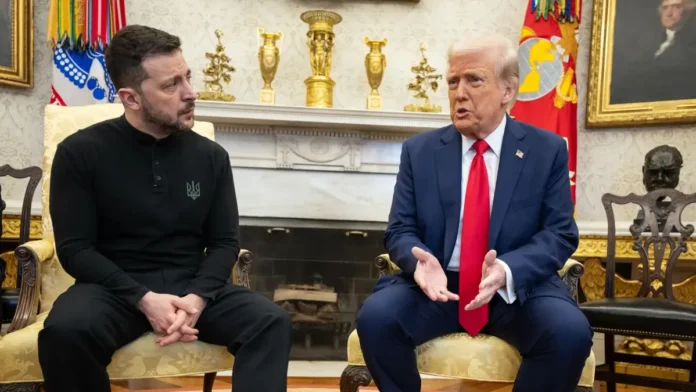
The episode comes amid escalating disagreements between US President Donald Trump and the Ukrainian leadership over the direction of the war, pressure on Russia and the conditions for a possible settlement.
Ukraine has relied heavily on American intelligence, military equipment and other forms of assistance since Russia launched its full-scale invasion in February 2022.
Starlink Restrictions Remain a Separate Concern
The second major issue raised by Zelensky involves Starlink, the satellite internet network operated by Elon Musk’s SpaceX.
Ukrainian forces rely on satellite connectivity for communications and aspects of their battlefield operations. The system has also been used to support drone operations, making changes to its performance particularly consequential for military planning.
Asked whether Starlink restrictions were fully over, Zelensky said they were not.
He said Ukrainian military officials believed the restrictions had resulted from a message or directive from the US government, although he could not identify the individual or office responsible.
The distinction is important: Zelensky described Ukraine’s assessment of the restrictions, but the precise chain of responsibility has not been independently established.
The reported limitations have raised concerns about whether Ukrainian military units can depend on consistent access to communications technology during critical operations.
Scott Bessent Challenges Zelensky’s Account
US Treasury Secretary Scott Bessent pushed back against Zelensky’s suggestion that the American government had ordered the Starlink restrictions.
Speaking separately on NBC’s Meet the Press, Bessent said President Trump and Secretary of State Marco Rubio had categorically denied that the administration was responsible. He criticized Zelensky’s accusation as reckless.
The exchange highlights a central point of dispute: while Ukraine says restrictions affected a system it depends on, US officials have denied the Ukrainian president’s account of who ordered them.
The public statements have not, by themselves, established who authorized the restrictions or the precise reasons behind them.
Why American Intelligence Matters to Ukraine
The United States has played a significant role in helping Ukraine detect and respond to Russian attacks. Its intelligence capabilities can provide information that Ukraine may not be able to obtain independently or as quickly through other partners.
European countries and other allies also contribute intelligence and military assistance. However, as Zelensky argued, different partners have different capabilities, and their contributions are not always interchangeable.
Any interruption in a specialized warning system could complicate Ukraine’s ability to prepare for incoming attacks. The actual battlefield impact of the three-day interruption, however, requires careful assessment rather than assumption.
Starlink presents a different but related challenge. Satellite connectivity supports communications in a war where conventional infrastructure has been damaged or disrupted. Restrictions affecting military use can therefore have operational consequences even when other communications channels remain available.
Is Washington Abandoning Kyiv?
The latest dispute has added to uncertainty over the future of US support, but the temporary intelligence interruption does not, by itself, establish that Washington is abandoning Ukraine.
Zelensky has acknowledged that the intelligence-sharing arrangement has resumed. At the same time, concerns about Starlink remain unresolved, and US officials have disputed his account of the restrictions.
The broader relationship is being tested by disagreements over military support, sanctions on Russia, energy policy and the terms of any potential peace agreement.
For Kyiv, the immediate priority is reliable access to intelligence and communications needed to defend against Russian attacks. For Washington, the public disagreement underscores the diplomatic and strategic tensions surrounding its approach to the war.
What Happens Next?
Three questions will shape the next stage of the dispute:
- Intelligence sharing: Will the restored arrangement continue without further interruptions?
- Starlink access: Will restrictions affecting Ukrainian military operations be fully resolved, and will the reasons for them become clearer?
- US-Ukraine relations: Can the two governments manage their disagreements while maintaining cooperation on Ukraine’s security?
For now, Zelensky says the crucial intelligence-sharing channel is functioning again, but Starlink restrictions remain a concern. The answers to the outstanding questions could have important implications for Ukraine’s air defenses, military communications and relationship with its most consequential international partner.