NEW DELHI | October 18, 2026
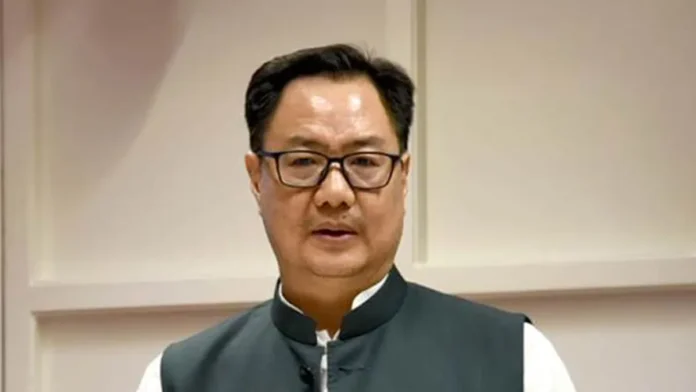
Union Parliamentary Affairs Minister Kiren Rijiju has accused opposition leaders and certain groups of attempting to provoke young people and incite violence during protests against the Special Intensive Revision (SIR) of electoral rolls. Invoking unrest in Bangladesh and riots in France, Rijiju said India was neither country and insisted that a change of government could take place only through elections.
His remarks have intensified the political debate surrounding the Election Commission’s voter-list revision exercise, with senior advocate Prashant Bhushan pushing back against the government’s interpretation of calls for political change. Bhushan has described the movement as an effort to protect electoral democracy and argued that expressing dissatisfaction with a government is a democratic right.
The dispute now centres on three connected questions: concerns over the electoral-roll revision process, allegations about the intentions behind the protests, and the competing views on how political change should take place in a democracy.
Why Did Kiren Rijiju Invoke Bangladesh and France?
In a social media post on Sunday, Rijiju alleged that certain political leaders and groups opposed to India’s interests had worked together to provoke young people and create violence on the streets.
He referred to violent developments in Bangladesh and incidents of rioting, arson and looting in France to argue that similar disorder should not be allowed to take place in India.
Rijiju also mentioned billionaire philanthropist George Soros in his remarks. He shared a video featuring All India Students’ Association (AISA) president Neha Bora and senior advocate Prashant Bhushan discussing political change.
The minister presented the comments as evidence of what he described as an attempt to encourage unrest and destabilise the government outside the electoral process.
However, the allegations remain Rijiju’s claims. The information available in the report does not independently establish that the protests were part of a coordinated conspiracy to incite violence or that the individuals mentioned were involved in such a plan.
Rijiju’s central argument was that governments in India must be changed through democratic elections rather than street violence or outside intervention.
What Is the SIR Controversy About?
The Special Intensive Revision, or SIR, is an exercise to scrutinise and update electoral rolls. Such revisions can become politically contentious because the accuracy and completeness of voter lists directly affect citizens’ ability to participate in elections.
The latest political confrontation comes amid protests in Delhi against Chief Election Commissioner Gyanesh Kumar, with demonstrators raising concerns about alleged irregularities in the revision process.
The central issue for protesters is the fairness and transparency of the exercise. Questions surrounding voter-list verification can have serious implications if eligible voters are wrongly excluded or electoral records contain errors.
At the same time, allegations about the process need to be assessed against the Election Commission’s rules, official records and verifiable evidence. Political claims alone do not establish that irregularities have occurred on a particular scale.
The dispute has consequently expanded beyond the technical details of electoral-roll revision. It has become a broader argument about institutional accountability, democratic participation and the legitimacy of political opposition.
What Did Prashant Bhushan Say About Changing the Government?
Senior advocate Prashant Bhushan rejected the suggestion that calls for political change should automatically be treated as evidence of a conspiracy to overthrow the government through unlawful means.
According to the account provided, Bhushan said the movement was aimed at protecting electoral democracy. He argued that if what he described as arbitrary conduct continued, it could lead to a change in government.
Bhushan also maintained that he wanted political change and regarded that objective as part of democratic expression. He argued that expressing dissatisfaction with the government was not, in itself, a crime.
His position draws a distinction between advocating a change in government through democratic means and attempting to achieve that change through violence or unlawful action.
That distinction is central to the current dispute. Calling for a government to be voted out is different from organising violence, and any allegation of criminal conduct must be evaluated on the basis of evidence rather than political interpretation alone.
The comments attributed to Bhushan therefore reflect a sharply different understanding of the protests from the one presented by Rijiju.
Is the SIR Dispute Turning Into a Larger Political Confrontation?
The exchange illustrates how a dispute over electoral administration can develop into a wider confrontation over democratic legitimacy and political accountability.
For the government, allegations of attempts to incite violence raise questions about public order and the limits of political mobilisation. For protesters and their supporters, scrutiny of electoral-roll revision is linked to the right to vote and the need for confidence in election administration.
Both issues matter, but they require separate examination. Concerns about electoral rolls should be assessed through evidence about the revision process, while allegations of violence or organised attempts to destabilise the government require independent verification.
Rijiju’s references to Bangladesh, France and George Soros have added an international dimension to the political rhetoric. However, comparisons with unrest in other countries do not, by themselves, prove that similar events were being planned in India.
The available information does not establish an independent finding confirming the minister’s alleged conspiracy. Nor does it provide enough detail to determine the full extent of any irregularities alleged by protesters.
What Happens Next?
The immediate focus will remain on the concerns raised over the SIR process, the response from the Election Commission and the political fallout from the competing statements.
Greater transparency about voter-list revision procedures, clear explanations of disputed decisions and access to established complaint and correction mechanisms could help address legitimate concerns. Any specific allegations of violence or unlawful activity should be investigated on their own evidence.
The political debate is likely to continue as long as questions about the revision exercise and the intentions behind the protests remain contested.
The bottom line: Kiren Rijiju has accused opposition-linked groups of attempting to provoke violence during protests against SIR, while Prashant Bhushan says the movement is about defending electoral democracy. The key distinction is between advocating political change through elections and inciting unlawful violence; the available account does not independently establish Rijiju’s conspiracy allegation.