Qatar confirms continuing mediation, but reopening the shipping route, easing sanctions and resolving nuclear disagreements remain unfinished business.
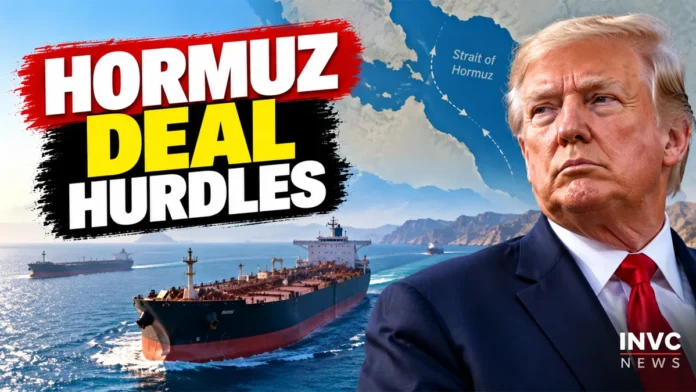
DOHA, Qatar | September 30, 2026 — US–Iran talks could determine when a vital energy shipping route becomes safer—and whether pressure on fuel costs begins to ease. President Donald Trump has predicted a swift American victory, while Qatar confirms that it continues carrying messages between Washington and Tehran. However, diplomatic activity has yet to produce an announced agreement to reopen the Strait of Hormuz. For households and businesses watching energy costs, the decisive question is what both governments will actually agree to do, and when.
Trump’s prediction comes without an implementation plan
Speaking in the Oval Office on September 28, Trump said the United States would win the war “very soon.” He acknowledged American officials’ contacts with mediators but provided no public timetable or agreed framework for ending the conflict.
He also predicted falling gasoline prices after an American victory.
His comments express confidence in an outcome. They do not announce a negotiated ceasefire, a date for restoring normal shipping or an agreed sanctions package.
Qatar confirms that the diplomatic channel remains open
Qatari Foreign Ministry spokesperson Majed al-Ansari said on September 29 that Doha continues working to bring the two sides closer and establish common ground.
According to Qatar’s account, recent efforts included meetings and exchanges of messages, some during the United Nations General Assembly in New York. Al-Ansari also acknowledged obstacles to an agreement.
That official confirmation matters because indirect diplomacy allows governments to exchange proposals without meeting each other across a negotiating table. Nevertheless, exchanging messages leaves room for substantial disagreement over their meaning and the conditions attached.
Qatar says its immediate priorities include restoring freedom of navigation through Hormuz and addressing the security concerns of countries in the region.
The central dispute: what happens first?
The diplomatic effort involves several connected issues: ending hostilities, restoring shipping access, lifting the American blockade of Iranian ports, addressing sanctions and deciding how to handle Iran’s nuclear program.
Reporting based on regional and American officials describes disagreements over the sequence of commitments. Washington wants nuclear issues addressed as part of an agreement. Tehran’s proposal seeks steps involving sanctions, frozen assets and the blockade alongside reopening Hormuz.
These remain negotiating positions and reported proposals.
Sequencing affects each side’s leverage. A government that acts first wants confidence that the other will fulfill its obligations. Mediators therefore need more than agreement on broad objectives; they need an arrangement both sides consider enforceable.
Sanctions relief remains disputed
Trump has denied reports that he offered Iran sanctions relief and access to frozen funds in exchange for nuclear concessions.
That denial makes it inaccurate to describe an American sanctions offer as settled policy. Discussions reported by unnamed officials must remain distinct from commitments publicly confirmed by the president.
Iranian President Masoud Pezeshkian, meanwhile, has expressed readiness for talks while rejecting coercion.
The statements leave a substantial gap between willingness to pursue diplomacy and agreement on its terms.
Why Hormuz matters beyond the battlefield
The Strait of Hormuz connects the Persian Gulf with wider shipping routes. Its importance extends to countries far outside the conflict.
Historical US Energy Information Administration data identify India, China, Japan and South Korea as major destinations for crude oil passing through the waterway. Disruption therefore carries consequences for Asian energy buyers as well as Gulf exporters.
For consumers, safer shipping could help reduce pressure on energy supplies. However, a diplomatic announcement would not automatically deliver cheaper fuel at the pump.
As an economic assessment, any eventual benefit would depend on sustained cargo movements, shipping costs and how international price changes reach domestic markets. Readers should therefore treat promises of immediate household savings cautiously.
What would demonstrate real progress?
Three developments would make the negotiations more consequential: a publicly confirmed agreement, a clear sequence of reciprocal steps and sustained evidence that commercial vessels can travel safely.
Announcements about sanctions would also need to identify which restrictions change and when those changes take effect.
Until those details emerge, Qatar’s mediation represents an active diplomatic effort with an unresolved outcome. The next development that matters most to readers is a workable agreement that restores shipping and reduces the risk of renewed fighting.