CUPERTINO, United States | September 8, 2026 —
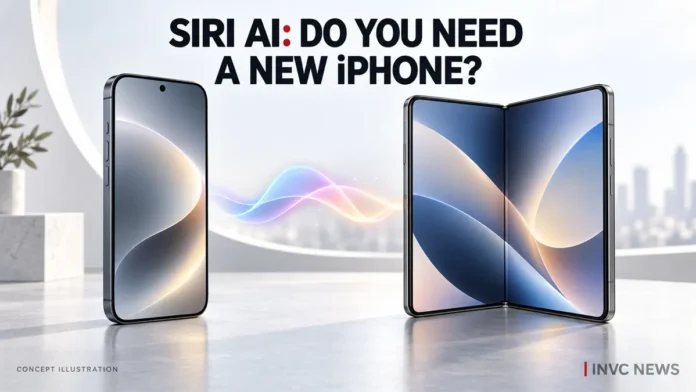
iPhone 18 Pro and foldable iPhone shoppers may have a less expensive route to Apple’s new Siri AI: keeping a compatible phone. Apple’s published support list includes iPhone 15 Pro, iPhone 15 Pro Max and iPhone 16 models or later, giving owners of several existing handsets a reason to reconsider an upgrade driven mainly by AI.
That changes the buying decision. A new phone needs to offer improvements that matter to its owner, whether that means better photographs, longer battery life or a larger screen that makes everyday tasks easier.
There is also a timing distinction. As of September 8, Apple schedules its special event for September 9 at 10 a.m. Pacific daylight time, or 10:30 p.m. IST. Its official materials do not establish a completed launch of either anticipated handset. Siri AI, introduced at WWDC on June 8, remains scheduled for an English-language consumer beta later this year.
This prelaunch analysis examines Apple’s published information and the upgrade questions it raises. Hands-on hardware testing remains pending.
Which existing iPhones does Apple list for Siri AI?
Apple’s announced compatibility provides a useful starting point. It also draws a distinction within the iPhone 15 family that buyers could easily overlook.
| Existing iPhone | Announced Siri AI hardware eligibility |
|---|---|
| iPhone 15 Pro and iPhone 15 Pro Max | Included |
| iPhone 15 and iPhone 15 Plus | Not included |
| iPhone 16 models and later existing iPhones | Included |
| iPhone 14 models and earlier | Not included |
Eligibility does not mean every feature is available now. Software release timing, language, region and individual hardware requirements still apply.
For example, Apple identifies selected devices, including iPhone Air and iPhone 17 Pro models, for its more advanced on-device model, expressive voices and enhanced dictation. Buyers should therefore check the particular capability they want before assuming every compatible phone will deliver the same experience.
Siri AI’s biggest test is whether it saves time
Apple describes an assistant that can find information across messages, emails and photos, understand screen content, and help users act across apps. It also plans a dedicated Siri app for continuing conversations.
The practical assessment should start with ordinary tasks. Can the assistant find the right booking among similar emails? Can it follow a correction without losing the original request? How often does a user need to repeat an instruction?
Those are review criteria, with outcomes still to establish through testing. A convincing demonstration can explain a feature; repeated use shows whether people can depend on it.
For Indian buyers, language support deserves particular attention. Apple’s English-first Siri AI timetable does not establish an equivalent Hindi rollout date. Anyone who mainly uses Hindi or another regional language should check that language’s availability before paying for an upgrade centered on the assistant.
What would make an iPhone 18 Pro upgrade worthwhile?
The camera case needs photographs and video captured under comparable conditions. Reviewers should examine moving subjects, indoor scenes, skin tones and detail at different zoom settings. A camera specification alone cannot settle those questions.
Battery testing needs the same discipline. Screen brightness, mobile signal and workload affect how long a charge lasts. Side-by-side tests should therefore explain their settings and include sustained use, rather than relying on an isolated battery claim.
The new phone should also demonstrate how it handles heat during navigation, video recording and demanding apps. For an owner whose current device already works well, these measurable differences will help establish whether the price makes sense.
A foldable iPhone needs to justify the larger screen
If Apple introduces a foldable iPhone, its strongest argument will depend on what the expanded display lets people do.
A buyer who regularly reads documents, compares information or works across apps should examine how those activities behave on the actual device. App layouts, typing comfort and the transition between folded and unfolded use deserve as much attention as the opening mechanism.
The ownership questions are equally concrete: pocket comfort, screen reflections, hinge behavior, repair pricing and service access. Apple must establish the product’s specifications, availability and support terms before buyers can make a meaningful comparison.
For now, the evidence does not support naming a winner between iPhone 18 Pro and a possible foldable model.
Social media reactions: excitement meets questions about cost
A public Reddit discussion about Apple’s September event captures several different priorities ahead of the presentation.
User Robbitjuice wrote, “Excited to see their foldable,” while explaining that they wanted to see Apple’s approach before choosing their next phone.
Another participant, buzz_shocker, focused on affordability: “The surprise gonna be the price.”
Meanwhile, yoo_saymyname said iOS 27’s release and performance mattered more to them than the foldable phone.
These are individual comments from a prelaunch discussion. They illustrate buyer concerns without establishing overall consumer sentiment or the performance of an unreleased product.
The useful questions behind those reactions are clear: What does the new design add? What will ownership cost? Will the software work well enough to make daily use easier?
The upgrade decision starts with the phone you own
Owners of a compatible iPhone have a reason to assess the Siri AI rollout on their current device before spending primarily to gain access to the assistant.
People using an unsupported handset face a different calculation. They can compare eligible models against their budget, camera needs and expected years of use. Apple’s compatibility list gives them options beyond waiting for the next premium launch.
Meanwhile, buyers interested in folding hardware should wait for official product details and credible tests of the applications they use most.
For Indian shoppers, the comparison should use the actual local price, storage capacity, trade-in terms and service costs once available. A US price converted into rupees cannot establish Apple’s Indian retail price.
Siri AI gives Apple another reason to encourage upgrades. Its support for existing phones also gives customers a reason to be selective. The strongest purchase will be the one that solves a clear limitation in the phone they already own.