By Team INVC | INVC NEWS
Published: August 29, 2026 |14 : 57 PM IST
NEW DELHI, India | August 29, 2026 —
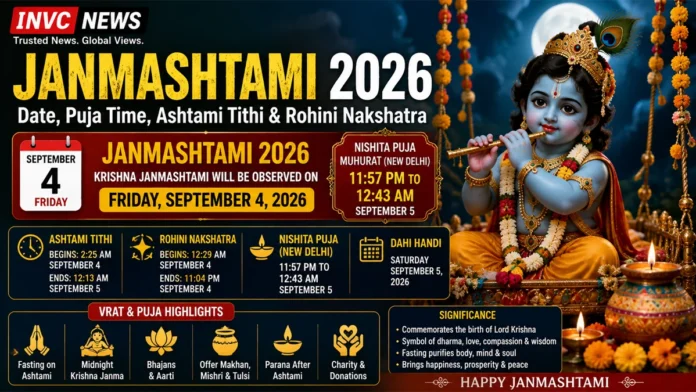
Janmashtami 2026 will be celebrated on Friday, September 4, with devotees across India preparing for fasting, midnight puja, Krishna Janma celebrations and temple ceremonies.
For New Delhi, the Nishita Puja Muhurat is from approximately 11:57 PM on September 4 to 12:43 AM on September 5, placing the traditional midnight worship close to the symbolic birth moment of Lord Krishna.
The festival is observed on Krishna Paksha Ashtami when Rohini Nakshatra holds special religious significance in Janmashtami traditions.
In 2026, both Ashtami Tithi and Rohini Nakshatra occur on September 4, making the date especially important for devotees planning vrat and midnight worship.
Janmashtami 2026 Date and Time
Festival: Krishna Janmashtami 2026
Date: Friday, September 4, 2026
Nishita Puja: 11:57 PM to 12:43 AM, September 5
Midnight Moment: Around 12:20 AM, September 5
Ashtami Tithi Begins: 2:25 AM, September 4
Ashtami Tithi Ends: 12:13 AM, September 5
Rohini Nakshatra Begins: 12:29 AM, September 4
Rohini Nakshatra Ends: 11:04 PM, September 4
Dahi Handi: Saturday, September 5, 2026
Timings above are for New Delhi and may vary by location.
Also Read – : Weekly Horoscope August 31–September 6, 2026
Why Is Janmashtami Celebrated?
Krishna Janmashtami commemorates the birth of Lord Krishna, traditionally regarded as the eighth incarnation of Lord Vishnu.
According to Hindu tradition, Krishna was born to Devaki and Vasudeva in Mathura at midnight.
The festival therefore reaches its spiritual high point around midnight, when temples and homes perform Krishna Janma rituals, bhajans, aarti and special puja.
Many devotees decorate a cradle for Bal Krishna and symbolically celebrate his birth at Nishita Kaal.
Why Rohini Nakshatra Matters in Janmashtami
Rohini Nakshatra has a special association with Lord Krishna’s birth tradition.
In 2026, Rohini Nakshatra begins shortly after midnight on September 4 and continues until approximately 11:04 PM.
This means Rohini remains active for most of Janmashtami day.
Ashtami Tithi also continues through the night until shortly after midnight, allowing devotees to observe the traditional Krishna Janma worship during the Ashtami period.
Janmashtami 2026 Nishita Puja Muhurat
For New Delhi, the main Nishita Puja window is approximately 11:57 PM to 12:43 AM.
Devotees who perform midnight Krishna worship may arrange their puja so that the main Janma celebration falls within this period.
A typical home celebration may include:
- Bathing and dressing the Krishna idol
- Decorating a small cradle
- Offering flowers and Tulsi leaves
- Offering fruits and sweets
- Lighting a diya
- Reciting Krishna mantras
- Singing bhajans
- Performing midnight aarti
Family and regional traditions may differ.
Janmashtami Vrat Rules
Many devotees observe a fast from the morning of Janmashtami until after the midnight puja or until Parana according to their tradition.
Common practices include avoiding grains and regular meals.
Some devotees take fruits, milk or vrat-friendly foods, while others observe a stricter fast.
There is no reason to put health at risk.
Janmashtami Parana Time
For New Delhi, traditional calculations indicate Parana after sunrise on September 5, when both Ashtami Tithi and Rohini Nakshatra have ended before sunrise.
Some communities, however, break the fast after completing Nishita Puja.
Because fasting customs vary significantly, devotees should follow their family or temple tradition when deciding when to perform Parana.
What Can Be Offered to Lord Krishna?
Popular traditional offerings include:
- Makhan or white butter
- Mishri
- Milk
- Curd
- Fruits
- Panjiri
- Tulsi leaves
- Homemade sweets
Devotees should follow local tradition and personal faith rather than treating any expensive offering as compulsory.
What Not to Do During Janmashtami Vrat
Those observing Janmashtami traditionally try to maintain both physical and mental discipline.
Devotees may choose to avoid:
- Anger and harsh speech
- Unnecessary arguments
- Waste of food
- Intoxicants
- Excessive indulgence
- Activities that interfere with the purpose of prayer and devotion
The vrat is traditionally understood as more than simply avoiding food.
Janmashtami Puja Mantra
A simple mantra commonly associated with Lord Krishna is:
“Om Namo Bhagavate Vasudevaya.”
Devotees may chant it according to their faith and family tradition.
The Hare Krishna Mahamantra is also widely recited during Janmashtami celebrations.
Janmashtami 2026 and Dahi Handi
Dahi Handi will be observed on Saturday, September 5, 2026.
The celebration is inspired by stories of young Krishna and his companions reaching pots containing butter and curd.
Large public Dahi Handi events are especially popular in Maharashtra, where human pyramids traditionally attempt to break an elevated handi.
Safety precautions are essential during large public events.
Also Read – : Venus Transit in Libra 2026: Zodiac Signs, Love, Money and Career Predictions
Janmashtami Daan
Devotees who wish to perform charity may consider:
- Food for people in need
- Milk or fruits
- Clothes
- Educational supplies
- Donations to a trusted charitable institution
Daan should always remain voluntary and within one’s financial capacity.
Janmashtami 2026: Key Timing to Remember
The most important point for devotees is that Krishna Janmashtami falls on Friday, September 4, 2026.
For New Delhi:
Ashtami begins: 2:25 AM
Rohini begins: 12:29 AM
Rohini ends: 11:04 PM
Nishita Puja: 11:57 PM–12:43 AM
Ashtami ends: 12:13 AM on September 5
Because Panchang timings change by location, devotees outside Delhi should use city-specific calculations when planning exact puja and Parana timings.
Janmashtami ultimately centers on devotion, discipline, prayer, compassion and the teachings associated with Lord Krishna.