TEHRAN, Iran | August 22, 2026
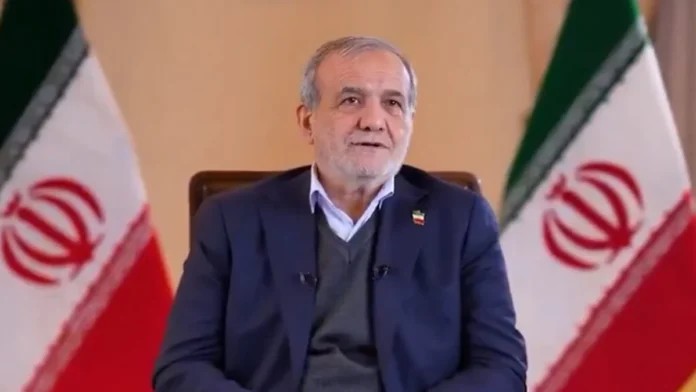
The Iran-US war has entered a potentially decisive phase after Iranian President Masoud Pezeshkian called for an end to the months-long conflict, arguing that Tehran should move toward ending hostilities while it remains in what he described as a position of “power and dignity.”
Pezeshkian’s comments represent one of the clearest public signals yet from Iran’s political leadership that Tehran sees value in reopening a path toward ending the confrontation with Washington. However, his message came as the United States prepares to intensify economic pressure on Iran, highlighting the wide gap that still separates the two sides.
Speaking during a meeting with doctors, Pezeshkian said it would be better to bring the conflict to an end now rather than allow it to continue indefinitely. He maintained that Iran had demonstrated resilience during the confrontation and argued that Tehran should seek a settlement without appearing to surrender to American pressure.
His remarks come against the backdrop of continuing tensions over the strategically important Strait of Hormuz, US sanctions, Iran’s nuclear program and the broader security crisis across the Middle East.
Pezeshkian Defends Earlier US-Iran Understanding
Pezeshkian also defended the earlier understanding reached between Tehran and Washington, rejecting criticism from within Iran that the arrangement amounted to Iranian concessions.
The Iranian president described the outcome of previous negotiations as significant and said it had been supported by officials involved in Iran’s national security decision-making process.
His intervention is important because it suggests that at least part of Iran’s political leadership continues to see negotiations as a viable option even as military and economic pressure remains intense.
However, Pezeshkian’s call should not be interpreted as confirmation that a peace agreement is imminent. Formal negotiations remain uncertain, and major disputes between Washington and Tehran have not been resolved.
US Preparing Stronger Economic Pressure on Iran
At the same time, the Trump administration is signaling that it intends to increase financial pressure on Tehran.
US Treasury Secretary Scott Bessent has indicated that Washington is preparing an intensified sanctions campaign against Iran as part of its broader economic strategy. The Treasury Department has already imposed multiple rounds of restrictions targeting Iranian financial networks, shipping operations, oil-related activity and entities accused by Washington of supporting Iran’s military establishment.
The US Treasury has described its campaign as part of “Economic Fury,” an effort intended to restrict Tehran’s access to international financing and disrupt networks Washington says support Iran’s military programs.
Recent Treasury actions have targeted financial channels, shipping networks and companies operating across several countries.
The growing emphasis on economic measures could become particularly significant if Washington believes financial pressure can achieve its objectives without another major expansion of military operations.
Iran Warns Against New Threats
Iran, however, is simultaneously signaling that its willingness to consider an end to the conflict should not be mistaken for military weakness.
Senior Iranian officials have warned that the country’s armed forces remain prepared to respond to renewed threats or attacks.
This combination of diplomatic messaging and military deterrence illustrates Tehran’s emerging strategy: express willingness to end the confrontation while insisting that any settlement must be presented domestically as an agreement reached from strength rather than under coercion.
Iranian officials have also strongly criticized US sanctions, describing Washington’s economic pressure as ineffective and unjust.
Oman Again Emerges as Key Diplomatic Channel
Diplomatic activity involving Oman could now become crucial.
Omani Foreign Minister Sayyid Badr bin Hamad Al Busaidi and Iranian Foreign Minister Abbas Araghchi have discussed regional developments, possible efforts to revive dialogue and the continuing dispute surrounding navigation through the Strait of Hormuz.
The two sides have emphasized the need to create conditions that could allow negotiations to resume and differences to be narrowed through peaceful means.
Oman has repeatedly played an intermediary role in US-Iran diplomacy and has supported efforts aimed at reducing military tensions and maintaining safe maritime navigation.
Earlier discussions between Oman and Iran also focused on ensuring safe passage through the Strait of Hormuz in accordance with international law.
Strait of Hormuz Remains at Center of Crisis
The Strait of Hormuz remains one of the most important issues in the Iran-US confrontation because disruption in the waterway can quickly affect global energy markets, shipping costs and inflation.
The narrow maritime passage connects Gulf energy producers with international markets and is one of the world’s most strategically important oil and gas transit routes.
Shipping through the strait has remained disrupted during the conflict, making freedom of navigation one of the central issues in diplomatic contacts involving Iran, the United States and regional governments.
Any agreement that substantially restores safe and predictable commercial movement through Hormuz could reduce pressure on global energy markets.
However, failure to reach an understanding could keep oil prices and shipping markets vulnerable to further geopolitical shocks.
Economic Pressure Increasing Inside Iran
The confrontation is also taking a growing economic toll inside Iran.
International sanctions, restrictions on trade and disruptions to oil exports have increased pressure on Tehran’s economy. Inflation, currency weakness and reduced access to international financial networks have added to the challenges facing Iranian households and businesses.
This economic reality may be strengthening arguments inside Iran for finding a negotiated exit from the conflict.
At the same time, hard-line elements are likely to resist any agreement they believe could weaken Tehran’s strategic leverage.
That creates a difficult balance for Pezeshkian: he must demonstrate that diplomacy could improve Iran’s economic position without creating the perception that the country accepted Washington’s demands under pressure.
Could the Iran-US War Move Back Toward Diplomacy?
The latest developments offer a possible opening, but significant obstacles remain.
Washington continues to demand major changes from Tehran, while Iran insists that any agreement must protect its sovereignty and national interests. The Strait of Hormuz, sanctions relief, nuclear issues and regional security arrangements are all likely to remain central to any future negotiations.
Pezeshkian’s statement nevertheless carries considerable political significance.
Rather than arguing for an indefinite continuation of the conflict, the Iranian president is now publicly presenting an end to the war as a desirable outcome — provided Tehran can portray the settlement as one reached with dignity and leverage intact.
With Oman maintaining diplomatic contacts and Washington simultaneously increasing economic pressure, the coming days could show whether the latest signals develop into renewed negotiations or simply mark another phase in the prolonged US-Iran standoff.