Dateline: NEW DELHI, August 12, 2026 —
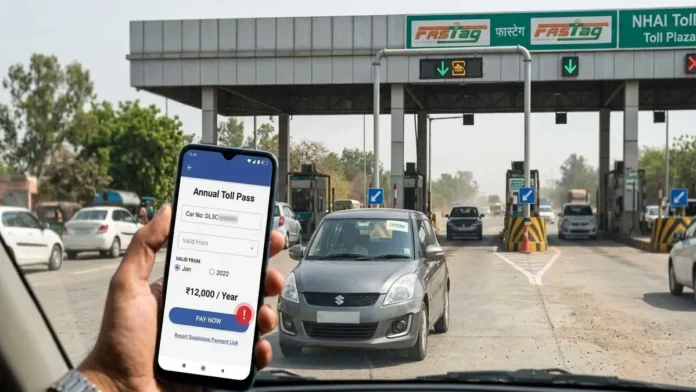
The FASTag Annual Pass Scam has prompted renewed caution for highway users, with the National Highways Authority of India (NHAI) warning motorists to stay away from fake websites, suspicious messages and unauthorized links claiming to sell or activate the National Highway Annual Pass.
Drivers planning to buy or renew an annual pass should verify the platform carefully before entering payment details, FASTag information or vehicle registration data. Fraudulent websites can imitate official services and may expose users to financial loss, phishing attempts or misuse of personal and vehicle-related information.
Official information shows that the FASTag Annual Pass can be activated through the Rajmargyatra mobile application or the official NHAI Rajmargyatra website. Users should therefore avoid unofficial websites, unsolicited social-media links and payment pages received through unknown messages.
NHAI Warning Over Fake FASTag Annual Pass Websites
The growing use of digital toll payments has created opportunities for scammers to build websites that look similar to genuine FASTag platforms.
Such websites may use terms including FASTag Annual Pass, NHAI Annual Pass, National Highway Toll Pass or Rajmargyatra to convince users that they are dealing with an authorized government platform.
A fraudulent page may then ask the user to enter a vehicle registration number, FASTag details, phone number, bank information, card credentials or other personal data before making a payment.
That is where the risk increases significantly.
Motorists should never assume a website is genuine simply because it contains government-related terminology, a FASTag logo or references to NHAI.
The safest approach is to reach the service directly through verified official platforms rather than following unfamiliar links received through SMS, WhatsApp, email, advertisements or social media.
Where Should You Buy the FASTag Annual Pass?
According to official IHMCL guidance, the Annual Pass can be activated through the Rajmargyatra mobile app and the NHAI website after verification of the vehicle and its associated FASTag.
The official Rajmargyatra portal currently provides facilities for users to book or view their Annual Pass, making it important for motorists to distinguish the genuine NHAI service from websites designed to imitate it.
Users who prefer the mobile route can access the official Rajmargyatra app, which IHMCL specifically promotes for Annual Pass services.
Before making any payment, motorists should confirm that they have reached an official NHAI or IHMCL service rather than a similarly named third-party portal.
How the FASTag Annual Pass Works
The National Highway Annual Pass is linked to an existing eligible FASTag and is intended for private, non-commercial cars, jeeps and vans.
Official guidance states that the pass is valid for one year or 200 toll crossings, whichever comes first, at eligible National Highway and National Expressway fee plazas.
The official Rajmargyatra portal currently displays a one-time price of ₹3,075, along with 200 toll crossings and one-year validity.
Motorists should note that the Annual Pass does not automatically cover every toll road in India. NHAI’s official eligibility information says it applies to designated toll plazas on National Highways and National Expressways. Toll roads operated by state governments or other local authorities may continue to charge normal FASTag fees.
Do You Need a New FASTag for the Annual Pass?
No. Eligible users generally do not need to purchase another FASTag simply to activate the Annual Pass.
Official FAQs state that the Annual Pass can be activated on an existing FASTag provided it meets the eligibility requirements. The tag must be properly affixed to the vehicle, linked with a valid Vehicle Registration Number, and must not be blacklisted.
This is another area where users should be cautious about fraud.
A website claiming that every motorist must purchase an entirely new FASTag as a compulsory condition for receiving the Annual Pass should be treated with suspicion unless that instruction can be independently verified through official NHAI or IHMCL channels.
Never Click an Unknown FASTag Annual Pass Link Without Verification
An unfamiliar link promising instant activation, a special discount or priority access to the Annual Pass should not be trusted automatically.
Scammers often rely on urgency to push users into making a quick payment.
A message may tell the recipient that an offer is expiring, that the FASTag will stop working, or that immediate verification is necessary. Users should avoid acting on such claims without checking the information through official channels.
Instead of clicking the link in the message, motorists should independently open the official Rajmargyatra platform or NHAI-linked service.
This simple step can significantly reduce the risk of landing on a lookalike website.
Do Not Share FASTag or Vehicle Information With Unverified Platforms
Vehicle-related data should also be treated as sensitive information.
A FASTag is linked to a specific vehicle and is used for electronic toll transactions. India’s FASTag system uses Radio Frequency Identification technology to enable automatic toll payments as vehicles pass through toll plazas.
Users should therefore avoid entering vehicle registration details, FASTag information, one-time passwords, banking information or card credentials on a page that has not been verified.
Even when a fraudulent website fails to take money immediately, information collected through the page may potentially be used in later phishing or impersonation attempts.
Check the Website Before Making Payment
Drivers can take several straightforward precautions before paying for a FASTag Annual Pass.
First, check whether the service is being accessed through an official NHAI or IHMCL platform.
Second, avoid URLs containing misspelled versions of Rajmargyatra, FASTag or NHAI.
Third, do not rely only on the appearance of the website. Fraudulent websites can copy logos, colors and page layouts.
Fourth, avoid sending money directly to an unknown UPI ID, personal bank account or QR code simply because someone claims it is connected to the Annual Pass.
Finally, never disclose an OTP, card PIN, internet banking password or other confidential credential to someone claiming to be an NHAI representative.
Annual Pass Is Not Mandatory
Highway users should also know that purchasing the Annual Pass is optional.
Official IHMCL FAQs state that motorists who do not want the Annual Pass can continue using their FASTag normally and pay applicable toll charges at fee plazas.
That means users should be particularly suspicious of messages saying their existing FASTag will automatically stop working unless they immediately buy an annual plan.
The regular FASTag ecosystem continues to operate for users who choose not to activate the Annual Pass.
Who Is Eligible for the FASTag Annual Pass?
The Annual Pass is intended only for private, non-commercial cars, jeeps and vans.
It is not designed for commercial vehicles, and official rules state that use in an ineligible commercial vehicle can result in deactivation.
The pass is also vehicle-specific and cannot be transferred from one vehicle to another.
For users whose FASTag is registered only against a chassis number, official guidance says the Vehicle Registration Number must first be updated before an Annual Pass can be activated.
How Are the 200 Crossings Counted?
The number of transactions depends on the type of tolling system.
At a point-based fee plaza, each crossing counts as one transaction, meaning an outward and return journey would normally count as two crossings.
For closed tolling systems, an entry-and-exit pair is treated as one crossing under the Annual Pass rules.
Once the user completes 200 eligible crossings or reaches the end of the one-year validity period, whichever happens first, the Annual Pass expires and the FASTag returns to its normal mode of operation.
How to Verify FASTag Information Safely
Users who want to check the status of a FASTag linked to their vehicle should rely on official services.
The National Payments Corporation of India provides a facility to check NETC FASTag status using a vehicle registration number.
IHMCL also maintains official FASTag information and customer-support resources for highway users.
For FASTag-related complaints and queries, NHAI and IHMCL provide the 1033 National Highways Helpline, which covers FASTag issues as well as toll-plaza complaints and other highway-related concerns.
What to Do if You Suspect a Fake FASTag Website
If a website or message appears suspicious, users should avoid completing the transaction.
Do not enter additional information and do not share an OTP.
If payment has already been made, contact the relevant bank or payment provider immediately and take the necessary steps to secure the account.
Any FASTag-related concern can also be verified through official NHAI or IHMCL support channels rather than relying on the individual or website that initiated the contact. IHMCL lists dedicated contact resources for FASTag complaints on its official website.
FASTag Annual Pass Users Should Remember These Safety Rules
For motorists considering the Annual Pass, the central message is simple: verify first, pay second.
Use the official Rajmargyatra app or official NHAI web service. Avoid unknown links. Do not share confidential banking credentials, FASTag information or vehicle data on unverified platforms.
Users should also verify current fees and eligibility conditions on the official platform before completing payment, because rates and rules can be revised.
With fake digital platforms becoming increasingly convincing, checking the authenticity of the website or app can prevent both financial fraud and misuse of personal information.
For highway users, taking a few extra seconds to verify the source is far safer than responding to an unsolicited link offering a seemingly convenient FASTag Annual Pass.