NEW DELHI, Aug. 11, 2026
Surya Grahan 2026, the second and final solar eclipse of the year, is set to occur on Wednesday, August 12. The event will be a total solar eclipse, but it will not be visible from India.
According to the timings provided, the solar eclipse will begin at 9:04 p.m. Indian time, reach its peak at 11:16 p.m. and end at 1:28 a.m.
The eclipse is also set to coincide with Amavasya according to the Panchang. With the celestial event approaching, questions have emerged over its visibility in India and whether the traditional Sutak Kaal will apply.
Will the August 12 Solar Eclipse Be Visible in India?
The total solar eclipse on August 12, 2026, will not be visible from India.
It will be nighttime in India during the eclipse, meaning people in the country will not be able to directly observe the celestial event.
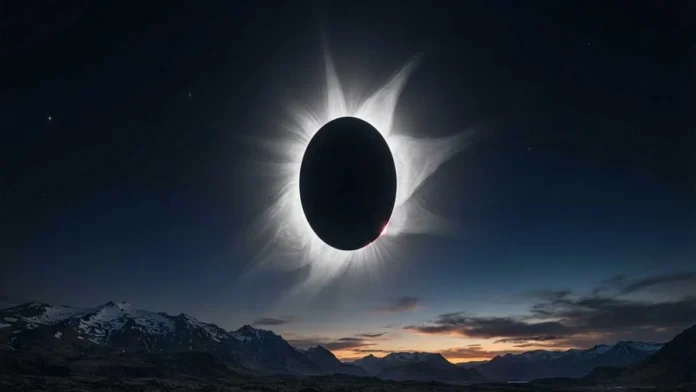
The total eclipse will instead be visible from select parts of the world. In locations along the path of totality, the Moon will completely cover the Sun for a period of time, temporarily darkening the daytime sky.
Surya Grahan 2026 Timing
According to the details provided, the August 12 solar eclipse will follow this schedule in Indian time:
- Eclipse begins: 9:04 p.m.
- Maximum eclipse: 11:16 p.m.
- Eclipse ends: 1:28 a.m.
Because these timings fall during nighttime in India, the eclipse will not be directly visible from the country.
Will Sutak Kaal Apply in India?
Under traditional religious beliefs associated with eclipses, Sutak Kaal is observed in places where an eclipse is visible.
Since the August 12 solar eclipse will not be visible in India, the Sutak Kaal associated with this eclipse is not considered applicable in the country under those beliefs.
Accordingly, people in India would not be required to follow the special religious restrictions traditionally associated with Sutak Kaal for this eclipse.
These practices are matters of religious tradition and should be distinguished from the astronomical science of a solar eclipse.
What Happens During a Total Solar Eclipse?
During a total solar eclipse, the Moon passes between Earth and the Sun and, from locations within the path of totality, completely blocks the Sun for a limited period.
For observers in those locations, daylight can briefly become significantly darker as the Moon covers the solar disk.
For India, however, the August 12 event will occur while it is nighttime, ruling out direct observation of the eclipse from the country.