KINSHASA, Democratic Republic of the Congo | August 7, 2026
DR Congo Ebola Outbreak: 330 Children Dead as UNICEF Warns of Escalating Health Emergency
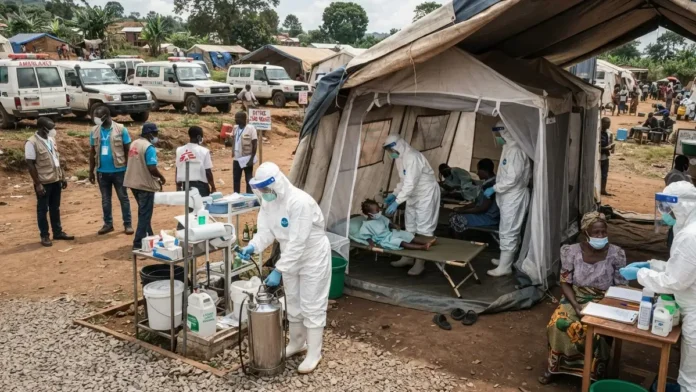
DR Congo Ebola Outbreak has claimed the lives of 330 children, with the epidemic severely disrupting essential healthcare services in the country’s eastern Ituri Province, according to the United Nations Children’s Fund (UNICEF).
UNICEF said that as of August 2, the Democratic Republic of the Congo (DRC) had recorded 743 laboratory-confirmed Ebola infections among children aged 17 years and younger, resulting in 330 deaths.
The agency warned that children now account for nearly one in four confirmed Ebola cases, yet represent almost one-third of all fatalities. Children under the age of five remain the most vulnerable, with fatality rates reported to be more than twice as high as those among adults.
Essential Healthcare Services Severely Affected
UNICEF said the outbreak has significantly disrupted routine childhood immunization programs, maternal healthcare, and other life-saving medical services.
Fear of infection, overwhelmed healthcare facilities, and reduced access to medical care have prevented many families from seeking treatment for both Ebola and other common illnesses.
John Agbor, UNICEF’s Representative in the Democratic Republic of the Congo, said the outbreak is placing enormous pressure on the country’s healthcare system.
“The Ebola outbreak is severely affecting the entire health system. It is also disrupting treatment for malaria, diarrhea, and other preventable diseases that remain among the leading causes of child mortality,” Agbor said.
Doctors Without Borders Warns Crisis Is Worsening
International humanitarian organization Doctors Without Borders (Médecins Sans Frontières – MSF) warned on Wednesday that the Ebola situation in eastern DRC has become “more serious than ever.”
The organization said the virus is spreading at an unprecedented pace, with no immediate signs that transmission is slowing.
Nearly 4,000 Confirmed Cases Reported
According to health authorities, the outbreak has continued to expand rapidly since it was officially declared on May 15.
As of Tuesday, the country had recorded:
- 3,973 confirmed Ebola cases
- 1,801 deaths
making it one of the most severe Ebola outbreaks in recent years.
Passenger Boat Detained After Suspected Ebola Death
Authorities also announced additional preventive measures after a passenger who had traveled aboard a riverboat from Tshopo Province, one of the outbreak’s epicenters, died after developing symptoms consistent with Ebola.
The vessel was stopped approximately 65 kilometers from central Kinshasa while health officials launched emergency screening procedures.
Health Minister Roger Kamba said authorities acted immediately after receiving reports that a passenger who had disembarked in Mongala Province developed fever and severe diarrhea before later dying.
“We are taking precautionary measures. At this stage, it remains only a suspected case and has not yet been confirmed,” Kamba said.
Government spokesperson Patrick Muyaya later confirmed that a security and health surveillance perimeter had been established around the vessel.
A mobile laboratory has been deployed to test all passengers and crew members for possible Ebola infection.
Health Officials Intensify Containment Efforts
Congolese authorities, together with international health organizations, continue expanding surveillance, contact tracing, laboratory testing, and emergency medical response efforts in an attempt to contain further transmission.
Health experts warn that maintaining routine healthcare services while combating the Ebola outbreak remains essential to preventing additional deaths from both Ebola and other treatable diseases.
Reference Links
- UNICEF – Democratic Republic of the Congo: https://www.unicef.org/drcongo
- World Health Organization (WHO) – Ebola Virus Disease: https://www.who.int/health-topics/ebola
- Doctors Without Borders (MSF): https://www.msf.org
- Democratic Republic of the Congo Ministry of Public Health: https://www.sante.gouv.cd