New York | July 27, 2026
Global Automotive Market Trends 2026
The global automotive industry is undergoing one of its most significant transformations in decades as rising vehicle prices, economic uncertainty, electric vehicle (EV) adoption, artificial intelligence (AI), and changing mobility preferences reshape consumer behavior.
According to a recent McKinsey & Company mobility survey of more than 20,000 consumers across China, Germany, Japan, the United Kingdom, and the United States, affordability, advanced technology, and flexible mobility solutions are emerging as the primary drivers of future vehicle demand.
Economic Pressure Is Changing Buying Decisions
The report shows that inflation and financial concerns are having a direct impact on consumers’ purchasing plans.
Key findings include:
- 32% of respondents said they may postpone buying their next vehicle because of economic uncertainty.
- 45% said they would consider purchasing a smaller vehicle to stay within budget.
Consumers are becoming more price-conscious while carefully evaluating long-term ownership costs.
Value for Money Matters More Than Ever
Despite tighter household budgets, buyers are not willing to compromise on quality or technology.
According to the survey:
- 60% of respondents identified value for money as the most important factor when purchasing a vehicle.
- Modern safety systems, connectivity, and digital features remain high priorities even among cost-conscious buyers.
Automakers are therefore under pressure to deliver affordable vehicles without sacrificing innovation.
Electric Vehicles Continue to Gain Momentum
The survey indicates that EV adoption continues to accelerate, although demand varies significantly by region.
Consumer Interest in Buying an EV
| Country/Region | Likely to Choose an EV |
|---|---|
| China | More than 80% |
| Europe | Around 50% |
| Japan | 37% |
| United States | 36% |
China remains the global leader in consumer interest, while Europe continues to see steady adoption. Japan and the United States are also recording growing demand despite infrastructure and pricing challenges.
EV Buyers Are Becoming More Mainstream
Electric vehicles are no longer attracting only early adopters.
The report suggests that:
- Middle-class households are increasingly considering EVs.
- Concerns over driving range have eased compared with previous years.
- Charging infrastructure, battery lifespan, and purchase prices remain important considerations for many buyers.
As charging networks expand and battery technology improves, EV adoption is expected to continue growing.
AI and ADAS Are Becoming Key Competitive Advantages
Artificial intelligence and Advanced Driver Assistance Systems (ADAS) are rapidly becoming major purchasing factors.
According to the survey:
- Approximately one in four consumers said they would switch to another vehicle brand if it offered superior self-driving or driver-assistance technology.
- Interest in autonomous driving technologies was strongest among consumers in China.
Manufacturers are increasingly investing in AI-powered software, intelligent cockpit systems, predictive maintenance, voice assistants, and advanced safety features.
Brand Loyalty Is Declining
The report also highlights changing consumer attitudes toward traditional automotive brands.
Key findings include:
- 28% of respondents said they are open to changing vehicle brands for their next purchase.
- New entrants—particularly Chinese automakers—are attracting buyers with competitive pricing, advanced technology, and feature-rich vehicles.
This growing competition is forcing established manufacturers to accelerate innovation and improve customer value.
Vehicle Buying Is Becoming More Digital
Today’s buyers increasingly combine online research with in-person dealership visits.
Emerging trends include:
- Greater use of AI-powered vehicle comparison tools.
- Increased reliance on digital financing and purchasing platforms.
- Continued growth of omnichannel buying experiences, allowing customers to move seamlessly between online and offline purchasing.
Younger buyers and prospective EV owners are leading this shift toward digital-first shopping.
The Future of Mobility
Beyond privately owned vehicles, the report points to a broader transformation in transportation.
Future mobility is expected to include:
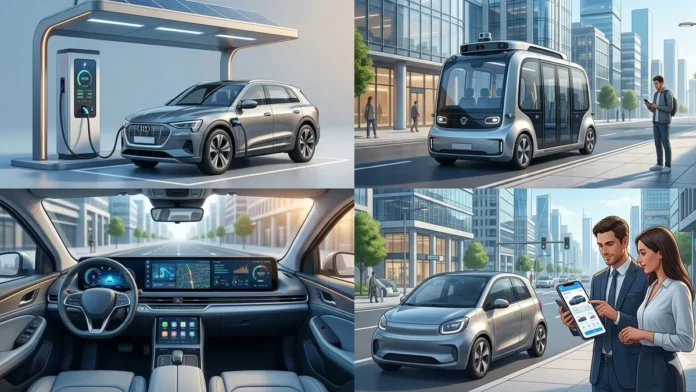
- Shared autonomous vehicles.
- Expanded micro-mobility options such as e-bikes and e-scooters.
- Connected mobility ecosystems integrating public and private transportation.
- Subscription-based vehicle ownership and flexible mobility services.
These developments are expected to reshape urban transportation over the coming decade.
McKinsey’s Recommendations for Automakers
According to McKinsey, future market leaders will be companies that successfully combine:
- Affordable pricing.
- Advanced technology.
- Personalized customer experiences.
- Flexible mobility solutions.
- Continuous software innovation.
The report concludes that building a high-quality vehicle alone will no longer be sufficient. Manufacturers must continuously adapt to evolving consumer expectations while balancing affordability, sustainability, and digital innovation.
Key Highlights
- Rising inflation is making consumers more cautious about buying new vehicles.
- 32% may delay their next vehicle purchase, while 45% are considering smaller models.
- 60% prioritize value for money without compromising on technology.
- EV demand remains strongest in China, followed by Europe, Japan, and the United States.
- AI, ADAS, and digital vehicle ecosystems are becoming major competitive differentiators.
- Brand loyalty is weakening as consumers increasingly consider newer automotive brands.
- Online research and AI-powered shopping tools are transforming the vehicle-buying experience.
Reference Sources
For additional information and official industry insights:
- McKinsey & Company – Automotive & Assembly: https://www.mckinsey.com/industries/automotive-and-assembly
- International Energy Agency (IEA) – Global EV Outlook: https://www.iea.org/reports/global-ev-outlook
- International Organization of Motor Vehicle Manufacturers (OICA): https://www.oica.net/
Editorial Note: This article is based on findings from McKinsey & Company’s latest global mobility survey of more than 20,000 respondents across five major automotive markets. Consumer preferences may evolve as economic conditions, government policies, and automotive technologies continue to change.