
TEHRAN, Iran | August 27, 2026 —
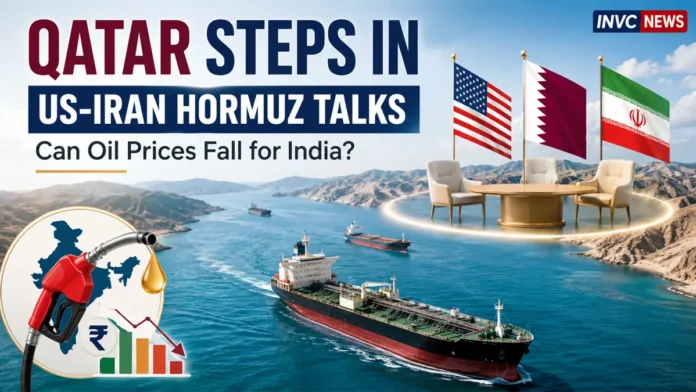
Strait of Hormuz oil prices are back in focus as Qatar’s Prime Minister Sheikh Mohammed bin Abdulrahman Al Thani heads to Tehran in a fresh attempt to revive diplomacy between the United States and Iran and ease a six-month energy crisis that has disrupted one of the world’s most important oil routes.
For India, the stakes are significant. Any durable agreement that restores normal tanker traffic through the Strait of Hormuz could reduce crude-oil supply risk, shipping costs and insurance premiums. But a diplomatic visit alone does not guarantee cheaper petrol or diesel for Indian consumers.
The immediate question is whether Qatar can help Washington and Tehran bridge their differences over sanctions, maritime access and control of the Strait.
Qatar PM Heads to Tehran for US-Iran Mediation
Qatar has emerged as one of the key regional intermediaries trying to prevent the U.S.-Iran confrontation from becoming a permanent energy and security crisis.
The Qatari Prime Minister’s Tehran visit is aimed at restarting meaningful diplomatic engagement after repeated attempts by regional mediators failed to deliver a comprehensive settlement.
The dispute is now heavily focused on the Strait of Hormuz, where Washington wants freedom of navigation restored while Tehran continues to link normalization of shipping to sanctions relief and other commitments from the United States.
Qatar has a strong incentive to push for a breakthrough because the disruption has also severely affected its own LNG exports.
Hormuz Oil Flows Have Collapsed From Pre-Conflict Levels
The scale of the disruption is extraordinary.
According to the U.S. Energy Information Administration, total crude oil and petroleum-liquids flows through the Strait of Hormuz averaged:
- 21.6 million barrels per day in Q4 2025
- 14.9 million barrels per day in Q1 2026
- 4.9 million barrels per day in Q2 2026
That means flows during the second quarter were less than one-quarter of their pre-conflict level.
Official EIA data can be checked here:
https://www.eia.gov/outlooks/steo/report/energysecurity/article.php
The Strait sits between Iran and Oman and historically carries a huge share of globally traded crude oil, petroleum products and LNG.
That is why even small signs of diplomatic progress can quickly move global oil prices.
Oil Prices Fell as Diplomacy Hopes Improved
Markets have already shown how sensitive crude prices are to developments around Hormuz.
Brent crude fell more than 2% to around $86.43 per barrel on Wednesday as investors reacted to renewed diplomatic activity involving Iran and Oman and hopes that shipping conditions could improve.
That remains well below some of the extreme levels reached earlier during the conflict.
However, oil prices could reverse quickly if negotiations fail or maritime tensions escalate again.
This is why the Qatar visit matters beyond Middle East diplomacy.
Iran-Oman Hormuz Deal Is Still Unclear
One of the biggest complications is uncertainty surrounding negotiations between Iran and Oman over the management of the Strait.
An Iranian Revolutionary Guards spokesperson said Iran and Oman had finalized arrangements involving control and revenues from the waterway.
But a senior Iranian source subsequently said discussions were still continuing and that no final agreement had been completed.
The conflicting accounts mean investors should be cautious about assuming the Strait is about to return to normal operations.
Also Read – : Iran-Oman Near Deal on New Hormuz Shipping Route; Strait Not Fully Reopening Yet
The negotiations have included ideas around temporary navigation corridors and safer commercial shipping, but wider U.S.-Iran disagreements remain unresolved.
Indian Refiners Are Already Adjusting Shipping Plans
The Hormuz crisis is no longer only a theoretical risk for India.
Iran has threatened penalties against vessels it says violated its transit rules.
For Indian refiners, changing tankers or shipping arrangements may help maintain crude supplies, but it can also increase logistics costs.
Higher freight and insurance expenses can add to the landed cost of imported oil even if headline crude prices remain stable.
Can a Hormuz Deal Lower Petrol and Diesel Prices in India?
Potentially—but not automatically.
A credible diplomatic agreement could lower the geopolitical risk premium built into crude oil prices.
If more tankers can move safely through Hormuz, several things could happen:
- Gulf crude exports could increase
- Shipping availability could improve
- Marine insurance costs could decline
- Freight rates could ease
- Global crude supply could become more predictable
- Brent prices could face downward pressure
All of those developments would be positive for India.
But petrol and diesel prices in India depend on more than Brent crude alone.
Domestic fuel pricing can also be influenced by the rupee-dollar exchange rate, international refined-product prices, freight costs, taxes, dealer commissions and oil-marketing company margins.
So even a sharp fall in Brent does not guarantee an immediate one-for-one reduction at Indian fuel pumps.
Also Read – : Iran-America War Sends Crude Higher: Will Petrol-Diesel Get Costlier in India?
Official Indian petroleum data is available from the Petroleum Planning & Analysis Cell:
Why India Has More to Gain From a Deal
India is one of the world’s largest crude-oil importers, making prolonged high oil prices a broader economic problem.
Expensive crude can affect:
- India’s import bill
- The rupee
- Inflation
- Airline fuel costs
- Logistics and freight
- Corporate input costs
- Petrol and diesel pricing pressure
A sustainable reopening of Hormuz could therefore benefit much more than motorists.
It could reduce pressure on inflation and improve the outlook for businesses that depend heavily on transportation and energy.
But the Risk of Another Oil Spike Has Not Disappeared
Diplomacy is moving, but the Strait remains highly unstable.
Iran has placed dozens of vessels on a restricted list, while tanker traffic remains far below historical norms and the United States continues to apply economic pressure on Tehran
The result is a market where oil can fall rapidly on peace hopes and rise just as quickly if those hopes collapse.
That is why the most important signal will not be a single diplomatic meeting.
Markets will want evidence that any agreement actually leads to sustained increases in tanker traffic through Hormuz.
What Indian Consumers Should Watch Next
Three indicators matter most.
1. Actual Hormuz Tanker Traffic
Announcements are less important than whether crude and product tankers genuinely begin moving through the Strait in larger numbers.
2. Brent Crude Price
A sustained move lower would reduce pressure on India’s imported energy costs.
3. Rupee-Dollar Exchange Rate
If the rupee weakens sharply, part of the benefit from cheaper international crude can disappear.
Can Qatar Deliver the Breakthrough?
Qatar’s intervention gives diplomacy another opportunity, but the gap between Washington and Tehran remains substantial.
For India, the best-case scenario would be a deal that restores regular shipping, lowers insurance and freight costs and reduces the geopolitical premium in crude prices.
The worst-case scenario would be another breakdown in talks followed by tighter sanctions, tanker seizures or renewed military escalation.
For now, Qatar’s Tehran mission has given oil markets a reason for cautious optimism.
Whether that optimism eventually translates into lower fuel costs in India will depend on one thing above all how much oil actually starts moving through the Strait of Hormuz again.











Comments are closed.