
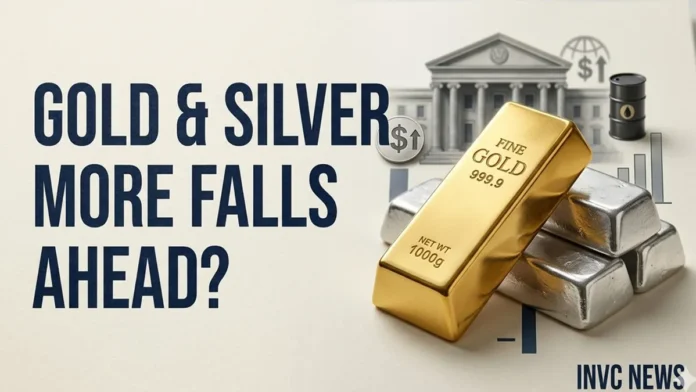
Washington, D.C., United States | October 26, 2026 : Gold and silver prices are heading into a crucial week as rising crude oil prices revive inflation concerns and investors await the US Federal Reserve’s latest monetary policy decision. After a sharp weekly decline, the precious metals market faces a fresh test: will prices fall further, or could changing expectations about interest rates trigger a recovery?
Market analysts expect the Federal Reserve’s October 27–28 meeting and the comments following its decision to play a major role in shaping bullion prices. The outlook will also depend on the US dollar, Treasury bond yields, economic data and developments in global energy markets.
For Indian buyers and investors, the direction of international bullion prices will be important, but domestic rates will also depend on the rupee-dollar exchange rate, import costs, taxes and local demand.
Gold and Silver End a Difficult Week
Precious metals came under significant pressure during the week ended October 23. According to a PTI market report published on October 25, gold futures on the US COMEX market for December delivery fell by $173.20, or about 4.14%, over the week to settle at $4,007.90 per troy ounce. Gold briefly slipped below $4,000 before recovering.
Silver futures declined by $3.35, or nearly 6%, to settle at $53.95 per ounce. In the Indian market, MCX gold fell nearly 4% during the week, while silver dropped by more than 7%, according to the same report.
The declines reflect the pressure created by a stronger US dollar, higher bond yields and renewed concern that rising energy prices could keep inflation elevated. When investors expect interest rates to remain high, assets that do not generate regular interest income, such as gold, can become less attractive relative to interest-bearing investments.
These figures refer to the specified contracts and trading period; they should not be confused with live prices or the retail rates charged by Indian jewellers.
Why Crude Oil Prices Matter for Gold
Crude oil has become an important part of the bullion outlook because a sustained increase in energy costs can complicate the fight against inflation.
When oil prices rise, transport, manufacturing and other business costs can increase. If higher energy prices feed into broader inflation, central banks may have less room to cut interest rates. Investors can then adjust their expectations for monetary policy, putting pressure on gold and silver.
Brent crude settled above $117 a barrel at the end of the reported week, intensifying concerns about the inflation outlook. The impact on bullion, however, is not automatic. Oil prices can also rise because of geopolitical uncertainty, which may increase demand for gold as a perceived safe-haven asset.
The competing effects make the coming week particularly sensitive to fresh economic information and central-bank signals.
Fed Meeting: The Biggest Market Trigger
The Federal Open Market Committee is scheduled to meet on October 27–28, with its policy announcement and a press conference expected on October 28. The Federal Reserve’s official calendar confirms the dates.
Investors will look for clues about the future path of US interest rates, particularly whether policymakers believe inflation risks justify keeping monetary policy restrictive for longer.
A more hawkish message—one that signals limited scope for rate cuts or leaves the door open to tighter policy—could support the dollar and bond yields. That combination could place additional pressure on gold and silver.
A less hawkish tone could have the opposite effect, potentially helping bullion recover as investors reassess the outlook for borrowing costs. Even if rates remain unchanged, the Fed’s explanation and its assessment of inflation could influence markets.
The decision itself is only one part of the story. Investors will also examine the central bank’s comments for indications of how it is balancing inflation risks against economic growth.
US Economic Data Could Add to Volatility
The Fed meeting is not the only event on the calendar. Investors are also watching several US economic releases, including durable goods orders, consumer confidence, third-quarter gross domestic product and Personal Consumption Expenditures inflation data.
These indicators can help markets assess the strength of the US economy and whether inflation is easing or proving persistent.
Stronger-than-expected activity combined with sticky inflation could reinforce expectations that interest rates will remain elevated. Conversely, signs of cooling economic activity or easing price pressures could change expectations for future policy.
The timing of the releases matters because markets may react to the data even before investors have fully assessed the Fed’s message. As a result, gold and silver could experience sharp movements in either direction during the week.
Dollar and Bond Yields: Two More Factors to Watch
Gold is generally priced internationally in US dollars. When the dollar strengthens, gold can become more expensive for buyers using other currencies, potentially limiting demand.
Bond yields also matter. US Treasury securities offer interest income, while gold does not. When Treasury yields rise, the opportunity cost of holding gold can increase, making the metal less attractive to some investors.
The relationship is not absolute: gold can still rise during periods of high yields if investors are concerned about geopolitical risks, financial instability or the longer-term outlook for currencies. Silver can be even more complicated because it serves both as a precious metal and an industrial commodity.
For that reason, investors should watch the combined direction of the dollar, yields, oil prices and economic expectations rather than relying on a single indicator.
What About the ECB and Bank of Japan?
Policy decisions from other major central banks could also influence currencies and global financial conditions.
The European Central Bank and the Bank of Japan are among the institutions investors are watching during this period. Their decisions and guidance can affect the euro, yen and broader currency markets, indirectly influencing the dollar and international bullion prices.
However, each central bank faces different economic conditions. Their decisions should be assessed separately rather than assumed to move gold and silver in the same direction.
What Could Happen to Gold and Silver Prices in India?
International bullion trends are important for Indian prices, but they do not tell the whole story.
A weaker rupee against the US dollar can raise the rupee cost of imported gold and silver, even if international prices remain stable. A stronger rupee can partly offset an increase in global prices. Import costs, taxes, local demand and dealer premiums also influence the final price paid by consumers.
For jewellery buyers, this means international price declines may not translate into an identical reduction in retail rates. Differences between cities, product purity, making charges and jeweller pricing can also affect the final bill.
Silver may experience additional volatility because industrial demand plays a significant role in its market. Changes in expectations for manufacturing and investment demand can therefore affect silver differently from gold.
Will Gold and Silver Fall Further?
A further decline remains possible if oil prices stay elevated, inflation concerns intensify and the Fed signals that interest rates may remain high for longer. Stronger dollar conditions and rising bond yields could add to the pressure.
But a recovery is also possible. A more reassuring Fed message, easing inflation concerns or a renewed demand for safe-haven assets could help prices stabilise.
Neither outcome is assured. Market expectations can change quickly, and the same economic development can affect gold and silver differently.
The bottom line: Gold and silver face a major test this week, with the Federal Reserve’s October 27–28 meeting at the centre of attention. After steep weekly losses, bullion could face further pressure if the dollar and yields strengthen, but a shift in rate expectations or a rise in safe-haven demand could support a rebound. Indian buyers should track global prices alongside the rupee-dollar exchange rate and local retail rates rather than assuming that the recent decline will continue.