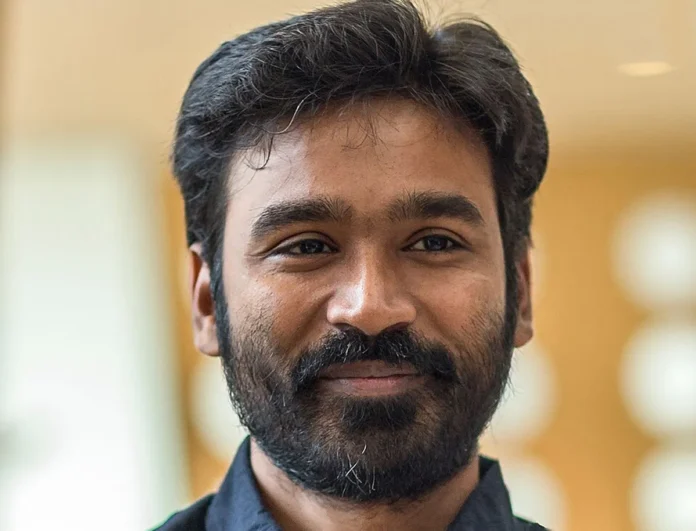
Chennai, India | October 26, 2026 : Could Tamil cinema star Dhanush be preparing for a political career? A meeting with members of his fan club’s women’s wing in Chennai has intensified speculation about his possible entry into Tamil Nadu politics, particularly after his fan network was reorganised as a welfare movement.
The actor met thousands of women supporters at a private college in Semmancheri on Sunday, October 25. He posed for photographs with attendees and presented them with silver Kamatchi lamps as Diwali gifts. Posters at the venue referred to him as “Thalaivar,” meaning leader in Tamil, adding to the political buzz surrounding the gathering.
However, Dhanush has not announced plans to join a political party, launch a political outfit or contest an election. The meeting reportedly focused on interacting with supporters, and he did not make a political speech.
The developments have nevertheless prompted comparisons with Tamil Nadu Chief Minister C. Joseph Vijay, whose transition from a film star with an organised fan base to a political leader has reshaped the state’s political landscape.
Why Dhanush’s Fan Club Meeting Matters
Dhanush’s meeting comes shortly after his fan association, formerly known as Dhanush Narpani Mandram, was reorganised as Dhanush Narpani Iyakkam, or the Dhanush Welfare Movement.
The restructuring and introduction of a new organisational logo have attracted attention because fan associations have played an important role in the political journeys of several South Indian film stars.
Reports said around 3,000 members and office-bearers of the women’s wing attended the Chennai gathering, with supporters travelling from different districts of Tamil Nadu. The actor interacted with attendees and posed for photographs.
The silver lamps reportedly featured lotus engravings, a detail that drew attention because the lotus is the election symbol of the Bharatiya Janata Party (BJP). However, the gifts alone do not establish any political affiliation, and Dhanush has not announced an association with the BJP or another political party.
The event also follows Dhanush’s earlier encouragement for fans to participate in social welfare activities beyond film-related celebrations. Such activities can help an actor’s fan network develop a broader community presence, although they do not necessarily signal an electoral campaign.
For now, the distinction remains important: Dhanush’s organisational activities are real, but a political debut remains unconfirmed.
Vijay: From Superstar to Tamil Nadu Chief Minister
<escape>C. Joseph Vijay</escape>, popularly known as Vijay, offers the most immediate example of how a Tamil film star can convert a large fan following into an electoral organisation.
Vijay announced the formation of his political party, Tamilaga Vettri Kazhagam (TVK), on February 2, 2024. Before entering electoral politics, he had spent years building a network of supporters through Vijay Makkal Iyakkam, which participated in social and community activities.
That network provided an organisational foundation for his political ambitions.
In the 2026 Tamil Nadu Assembly election, TVK won 108 of the state’s 234 seats, emerging as the single largest party but falling short of the 118 seats required for a simple majority on its own. Support from allied parties helped the TVK-led coalition secure a majority, and Vijay became chief minister on May 10, 2026.
His rise demonstrates that celebrity popularity can be a powerful political asset when combined with organisation, campaigning and electoral support. It does not, however, guarantee that another actor will achieve the same outcome.
N. T. Rama Rao: The Actor Who Changed Andhra Pradesh Politics
Nandamuri Taraka Rama Rao, widely known as N. T. Rama Rao or NTR, remains one of the most influential examples of an Indian film star entering politics.
A major star of Telugu cinema, NTR became widely recognised for portraying mythological figures, including Lord Rama and Lord Krishna. His screen image helped establish a powerful public identity that extended beyond entertainment.
On March 29, 1982, he founded the Telugu Desam Party (TDP), placing Telugu identity, regional pride and political self-respect at the centre of his campaign.
The party achieved a major victory in the 1983 Andhra Pradesh Assembly election, challenging the Congress party’s longstanding dominance in the state. NTR became chief minister and served multiple terms.
His political success showed how regional identity, a strong public image and a well-organised campaign could help a film star emerge as a serious political force.
M. G. Ramachandran: The Superstar Who Built a Political Legacy
M. G. Ramachandran, popularly known as MGR, helped establish the enduring connection between Tamil cinema and electoral politics.
His films frequently portrayed him as a champion of the poor and a fighter against injustice. That screen persona helped him build a strong emotional connection with audiences.
MGR was initially associated with the Dravida Munnetra Kazhagam (DMK). Following a split with the party leadership, he founded his own political organisation in 1972, which developed into the All India Anna Dravida Munnetra Kazhagam (AIADMK).
He became chief minister of Tamil Nadu in 1977 and remained in office until his death in 1987.
MGR’s career established a political model in which an actor’s popularity, welfare-oriented messaging and a disciplined party structure could reinforce one another. His influence continued long after his death and helped shape the careers of other Tamil film personalities.
Jayalalithaa: From Leading Actress to Chief Minister
J. Jayalalithaa’s political career offers another example of a film star building a long-lasting position in Tamil Nadu politics.
After achieving success in Tamil, Telugu and Kannada cinema, she entered the AIADMK in 1982 under the political influence of MGR. She subsequently became a prominent party campaigner and entered the Rajya Sabha.
MGR’s death in 1987 triggered a leadership struggle within the AIADMK. Jayalalithaa faced considerable political challenges before consolidating her authority over the party.
In 1991, she became chief minister for the first time. She later returned to office in several terms and became one of Tamil Nadu’s most influential political leaders.
Her welfare programmes, including initiatives associated with the “Amma” brand, became a significant part of her political identity. Her career also demonstrated that an actor entering politics could develop an independent leadership base rather than remain defined by their film career or political mentor.
Pawan Kalyan: A Difficult Start Followed by Political Success
Telugu actor Pawan Kalyan’s political journey illustrates the uncertainty involved in moving from cinema to electoral politics.
He founded the Jana Sena Party in 2014 after earlier involvement with his brother Chiranjeevi’s Praja Rajyam Party.
Pawan Kalyan faced a major setback in the 2019 Andhra Pradesh Assembly election, when he lost both constituencies he contested. Rather than abandon politics, he continued to build his organisation and work with political allies.
His subsequent political progress demonstrated that an unsuccessful election does not necessarily end a celebrity’s political ambitions. Organisation, persistence, alliances and the ability to connect with voters can matter as much as public recognition.
His experience also highlights the difference between attracting crowds and winning constituencies—a distinction that any actor considering a political career must confront.
Can Dhanush Follow the Same Path?
The examples of Vijay, NTR, MGR, Jayalalithaa and Pawan Kalyan show that South Indian cinema has repeatedly produced influential political leaders. But their journeys were shaped by different political circumstances, public issues, organisational networks and electoral strategies.
Dhanush has a career spanning Tamil cinema and major projects in Hindi and international productions. His professional recognition gives him public visibility, but a political career would require more than celebrity status.
A formal political entry would raise several questions. Would he establish a party, join an existing organisation or remain focused on social welfare? Would his fan network develop into a booth-level electoral structure? What political issues would he prioritise, and how would he seek support beyond his existing fan base?
None of these questions has been answered officially.
The timing has nevertheless made the speculation particularly prominent. Vijay’s rise to the chief minister’s office has demonstrated the electoral potential of a well-organised fan network in Tamil Nadu. Dhanush’s restructured welfare movement has therefore attracted attention even without a declared political agenda.
What Happens Next?
The next significant indicator will be whether Dhanush expands the activities of his welfare movement, announces a formal political initiative or makes a public statement about his future plans.
Until then, the meeting should be viewed as a development that has fuelled political speculation—not confirmation that he will contest the 2031 Tamil Nadu Assembly election.
The bottom line: Dhanush’s meeting with his women supporters and the restructuring of his fan club have intensified talk of a political debut. But unlike Vijay, MGR or NTR, Dhanush has yet to announce a party or electoral ambitions. Whether he eventually moves from cinema to politics remains an open question.